
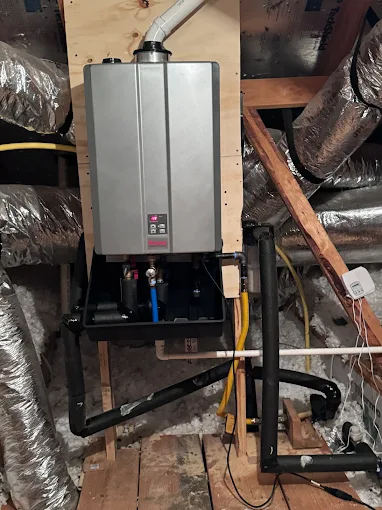
Tankless Water Heater Repair: Preventing Scale and Shutoffs
Last summer, a Keller homeowner called because their tankless water heater would run fine for a few minutes—then suddenly go cold. The weird part was that the home’s hot water wasn’t just “a little less hot.” It dropped off hard, like the unit was protecting itself. The next morning, their water heater error codes looked different, and their shower pressure felt normal for the cold side but not the hot.
That pattern is common with tankless systems when scale and mineral buildup start interfering with how the unit senses temperature and flow. In North Texas, where hard water is a frequent issue, scale can accumulate faster than many homeowners expect—until the heater either throttles performance, shuts off, or starts cycling.
The good news: most tankless shutoff problems don’t require replacing the whole unit. They usually require the right diagnosis and the correct maintenance repair steps before the buildup becomes permanent.
Quick Answer
Tankless water heater shutoffs are often caused by scale buildup on the heat exchanger and sensors, restricted water flow, or a failing internal component triggered by overheating or poor flow. The best fix is professional tankless service: a proper flush (when appropriate), inspection of flow/temperature sensors, and testing for scale-related performance loss. If the unit continues shutting off after cleaning and component checks, replacement may be the safer long-term option.
The Tankless System Angle: Why Scale Leads to Shutoffs
A tankless water heater heats water on demand, so it relies on two things staying “in sync”:
1. Adequate water flow through the unit
2. Accurate temperature sensing while heat is transferred efficiently
When hard water minerals (mostly calcium and magnesium) deposit on internal surfaces, they act like insulation. The burner may still fire, but the heat transfer becomes inefficient. That can cause the unit to reach protective temperature limits faster than it should.
What I commonly see during service calls
In real-world inspections, technicians often find that the heater isn’t “broken” in the traditional sense—it’s working too hard because scale is slowing heat transfer. The unit may:
- run for a short time,
- then reduce output or shut down to prevent overheating,
- throw codes related to temperature, flow, or ignition depending on the model.
One firsthand observation from my work: when homeowners wait until the unit starts shutting off, we frequently see evidence of accelerated internal scaling—even if the exterior looks clean. You can’t reliably judge internal buildup just by the unit’s age or how it looks.
Scale doesn’t just reduce hot water—it changes behavior
Scale can also affect:
- flow restriction, which reduces how much water moves through the heat exchanger,
- sensor accuracy, causing the heater to interpret normal conditions as unsafe,
- maintenance intervals, because once buildup thickens, simple flushing may not fully restore performance.
If your tankless heater is shutting down repeatedly, treat it like an early warning—not a nuisance.
What Homeowners Often Overlook
“It’s probably the gas or the thermostat…”
Many people assume a tankless shutoff is an electrical issue, a gas pressure issue, or the thermostat itself. Sometimes it is—but in North Texas, mineral scaling is a frequent root cause. Homeowners may not realize that even a properly functioning unit can fail its safety logic when scale reduces efficiency.
“I’ll just reset it”
Resetting a tankless heater can temporarily restore hot water, but it doesn’t remove the cause. Repeated cycling can:
- shorten component life,
- increase the chance of overheating events,
- create inconsistent hot water delivery.
Common Mistakes That Lead to Water Damage
Tankless heaters rarely leak like old tank-style units, but the damage can still be expensive when problems go unresolved—especially if shutoffs lead to workaround behavior.
Mistakes we commonly see
- Waiting until the unit stops mid-shower to call for service.
- Skipping annual maintenance (or assuming “no problems” means “no scale”).
- Using the wrong descaling approach—for example, DIY flushing without confirming compatibility with your specific unit and water chemistry.
- Ignoring water filter or inlet strainer issues that can mimic flow-related failures.
- Assuming the error code always means one thing. Different brands use codes differently, and flow/temperature sensors can be affected by scale.
A realistic service-case example
In one anonymized North Texas case, a family reported that their tankless heater “worked until bedtime,” then shut off during peak hot water use. The unit wasn’t leaking, but it was performing inconsistently. After inspection, the inlet strainer was partially restricted and internal scaling was already present. We recommended a proper tankless water heater service approach (cleaning/flush and sensor/flow checks). After correcting the flow restriction and addressing scale buildup, the shutoffs stopped.
Repair, Diagnostics, or Prevention: What to Do Next
The right next step depends on what’s happening inside the unit. A professional tankless service visit typically includes:
1) Diagnose the shutoff cause (not just clear the code)
A technician should verify:
- error code meaning by brand/model,
- incoming water flow and pressure,
- any restriction at the inlet/filters,
- venting and combustion conditions (for gas models),
- temperature/flow sensor performance (especially if scale is suspected).
2) Check for scale and decide between cleaning and deeper repairs
If scale is the driver, the typical repair path is:
- descale/flush using a process that matches the heater’s requirements,
- verify temperature stability after service,
- inspect for sensor issues that may have been affected by buildup.
If the unit continues shutting down after proper cleaning, it may require:
- sensor replacement,
- heat exchanger-related service (or, in some cases, replacement if damage is severe),
- addressing persistent flow restriction caused by plumbing changes elsewhere.
3) Confirm whether the unit is the right fit for your home
If your household uses hot water heavily (sprinklers, multiple showers, long dishwashing sessions), the heater’s sizing and maintenance schedule matter more than many homeowners realize.
If you’re also dealing with water quality problems, that can accelerate scaling. Consider whether a water filtration/softening strategy is appropriate.
If you want help evaluating your setup, this is a useful related service: water filter softener repair & installation.
Tankless Maintenance Checklist (Scale & Shutoff Prevention)
Use this as a homeowner-friendly baseline. Your exact schedule may vary based on water hardness and usage patterns.
- Watch for early warning signs
- hot water runs shorter than usual,
- temperature swings,
- repeating error codes or shutdowns,
- slower hot-water recovery after a shower.
- Check inlet strainer/filter
- clean if your unit has an accessible inlet screen (or ask a technician to check it).
- Plan professional flushing/descaling
- typically at regular intervals in hard-water areas (your plumber can recommend a schedule).
- Inspect temperature stability
- if the heater struggles to hold temperature, scale may be impacting heat transfer.
- Avoid DIY chemical mistakes
- use only compatible descaling methods for the unit type and manufacturer requirements.
- If you have a water softener, maintain it
- a failing softener can allow scale to build faster than expected.
A quick comparison: When repair beats replacement
| Situation | What usually fixes it | Why replacement may be next |
|---|---|---|
| Shutoffs after heavy hot use; unit otherwise new-ish | Flush/scale removal + sensor/flow checks | If heat exchanger damage or repeated failures persist |
| Error codes tied to temperature/flow | Descale, verify filters/inlet flow, test sensors | If sensors/controls repeatedly fail or performance can’t recover |
| Long-term buildup with reduced hot water output | Descaling + plumbing flow verification | If internal corrosion or severe scaling won’t restore efficiency |
What We Commonly See in North Texas Plumbing Systems
North Texas homes—especially those with older plumbing runs or hard water exposure—tend to show scaling sooner than people expect. Clay soil movement and seasonal temperature swings can also contribute indirectly: if plumbing connections shift or if systems are modified over time, flow patterns can change, and tankless heaters become less forgiving.
In Keller and the surrounding area, we also see a lot of homes with:
- high summer hot water demand,
- aging water distribution components,
- older shutoff valves and supply lines that can partially restrict flow without fully failing.
That’s why a tankless service visit shouldn’t be “just a flush.” Flow and supply conditions matter.
Professional Leak Detection Connection (Hidden Issues That Affect Hot Water)
A tankless heater can shut down due to flow problems, and sometimes the real flow issue is elsewhere in the plumbing system—like a hidden water leak draining pressure and hot water demand.
If you’re noticing unexplained water usage, damp spots, or recurring pressure changes, it’s worth investigating with proper diagnostics. For example, you can pair tankless service with leak location diagnostics when symptoms point to a hidden leak.
And if you suspect slab-related moisture, especially with flooring or foundation concerns, ask about slab leak location repair to confirm whether the hot water problem is being driven by a broader plumbing leak issue.
(While these are different service calls, the reality is homeowners often experience multiple symptoms at once—water pressure changes, temperature issues, and unexpected consumption.)
Keller, Texas Relevance: Why Scale Timing Matters Here
In Keller, hard water scale tends to show up as a performance issue earlier than many homeowners plan for—especially as systems age or if maintenance intervals slip. The longer scale stays inside the heater, the more likely the unit will trigger safety shutdowns because it can’t transfer heat efficiently. That’s why early service is so much cheaper than emergency troubleshooting after repeated shutoffs.
Also, with North Texas weather swings, homeowners often run more hot water seasonally (showers, laundry, cleaning), which can reveal scaling problems that were “barely tolerable” during milder months.
If your heater is shutting off, don’t wait for it to fail completely.
FAQ
How do I know if my tankless shutoff is caused by scale?
Common clues include inconsistent hot water temperature, reduced output after a period of use, and repeating error codes tied to temperature, flow, or overheating. In hard-water areas, scale is a frequent cause. A technician should inspect inlet flow, check for scale-related performance limits, and test sensors after a proper cleaning procedure.
Should I flush my tankless water heater myself?
Sometimes homeowners can do basic maintenance, but descaling is not one-size-fits-all. The correct chemical/process depends on the heater’s design and manufacturer requirements. A professional service helps confirm compatibility, prevent damage, and verify the heater returns to stable performance afterward.
What’s the difference between tankless repair and replacement?
Repair is typically appropriate when the issue is reversible—like scale buildup, restricted flow, or faulty sensors/controls. Replacement becomes more likely if the heat exchanger has sustained damage that can’t be corrected by flushing, or if the unit repeatedly fails safety checks despite proper service.
Can a water softener prevent tankless shutoffs?
A properly functioning softener can slow scale formation, which helps tankless performance and longevity. However, softeners require maintenance too. If the softener isn’t working correctly, scale can still build quickly—so it’s worth having both the water treatment and heater performance checked.
Ready to Protect Your Home From Plumbing Damage?
If your tankless water heater is shutting off, cycling, or running inconsistently, the smartest move is a diagnostic-first approach. Early scale removal and sensor/flow checks can restore performance and help prevent bigger plumbing and water damage problems down the road.
About All Source Plumbing
All Source Plumbing provides slab leak detection, drain repair, hydro jetting, sewer diagnostics, tankless water heater services, and emergency plumbing repairs throughout Keller, TX and surrounding North Texas communities. The company focuses on accurate plumbing diagnostics, long-term repair solutions, preventative maintenance, and helping homeowners protect their properties from costly water damage through professional plumbing services.