
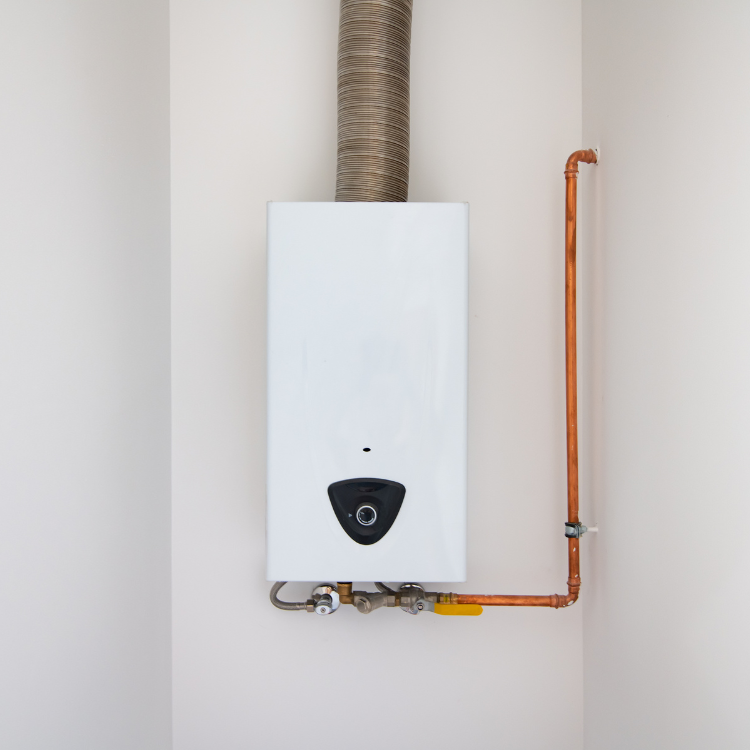
Tankless Water Heater Repair: Hot Water Starts, Then Stops
You’re standing in the shower in Keller, Texas, and the water is finally that perfect temperature—then it abruptly turns lukewarm. Not a slow drift, not a gradual change. It stops being hot, fast. For a lot of homeowners, that “starts hot then stops” pattern feels like a mystery… until you look at how tankless systems actually regulate flow and temperature.
In North Texas, where summer water use is high and many homes run long showers, a tankless heater that can’t maintain stable output becomes more than an annoyance. It can leave your household without reliable hot water and may signal a component issue that gets worse if it’s ignored (especially when hard water is involved).
Quick Answer
If your tankless water heater starts producing hot water but then stops, the most common causes are:
- Low or fluctuating water flow (clogged filters, flow sensor issues, or a partially blocked inlet)
- Mineral buildup from hard water affecting the heat exchanger
- Scale or debris triggering a protective shutdown when internal temperatures/flow conditions go out of range
- Faulty sensors or control board reacting intermittently
A professional tankless water heater service typically includes checking inlet water filter/strainer, verifying flow rate, inspecting for scale, and testing the system’s temperature/pressure and safety controls. If the unit is heavily scaled, repair may restore function, but replacement is often the smarter long-term option if the heat exchanger is damaged or performance has already degraded.
Why Hot Water Starts, Then Stops (What’s Really Happening)
Tankless heaters don’t “store” hot water like a traditional tank. They heat water on demand, and they do it by balancing three things:
1. Incoming water flow rate (gallons per minute)
2. Gas/electric heating capacity
3. Heat exchanger temperature regulation for safety and efficiency
When hot water begins, the system detects flow and ramps up heating. But if flow drops, the temperature regulation can shift quickly. Many units will either:
- reduce output until it can’t maintain temperature, or
- shut down briefly and then attempt to restart, or
- stop producing hot water until flow conditions and internal readings return to normal.
A technician’s common observation
On service calls like this, I often find that the “it works for a minute” behavior matches a partial blockage—most commonly at the inlet strainer/filter or within the unit’s flow path. Hard water scale can also build up unevenly, so the heater can heat initially, then efficiency collapses as flow/heat transfer changes.
In practical terms: the heater may still be “on,” but it’s no longer able to transfer heat effectively or safely.
What Homeowners Often Overlook
1) The shower isn’t just using hot water—it’s changing flow conditions
If you start a shower and then someone flushes a toilet, runs a sprinkler, or turns on a faucet, it can change the overall demand and flow dynamics. Many tankless units have minimum flow thresholds; if the system drops below that threshold, the heater may stop.
2) Hard water scale often shows up as “intermittent failures”
In North Texas, mineral content can deposit inside the heat exchanger and restrict flow passages. That restriction can be subtle at first—enough to cause temperature instability, then later enough to trigger protection shutdowns.
3) Quick “resets” can hide the real issue
Resetting the unit or power-cycling may bring hot water back temporarily, but it doesn’t remove scale, fix flow problems, or repair failing sensors. The underlying trigger is still there.
Common Mistakes That Lead to Water Damage
Tankless units are smaller than tanks, but the damage risk is real—especially when troubleshooting delays cause leaks elsewhere.
Common mistake homeowners make: assuming the problem is “just the heater” and ignoring signs of leaks or improper drainage.
Here’s what that looks like in real life:
- A homeowner hears the heater click, gets hot water briefly, then stops—so they keep using it.
- Meanwhile, a leak around plumbing connections or the unit’s condensate/venting area worsens because it’s easy to miss while you’re focused on temperature.
- If the unit is in a tight closet or near drywall, the water damage can progress behind finishes before anyone notices discoloration.
If you ever see water pooling, moisture around fittings, unusual odors, or repeated error codes, stop troubleshooting and get it inspected. Tankless systems are safe by design, but water leaks and improper venting/condensate handling should never be treated like “normal operation.”
Repair vs Replacement: What We Recommend After Diagnostics
When hot water starts and then stops, the right next step is diagnostics, not guesswork. A proper tankless water heater service usually includes:
Step-by-step checks a technician should perform
- Verify water flow rate at the unit (not just at the faucet)
- Inspect and clean the inlet filter/strainer (common cause of flow drop)
- Check for scale buildup and assess whether descaling is likely to restore performance
- Test temperature sensors/thermistors and the unit’s control logic
- Inspect gas pressure or electrical supply (for gas and electric models)
- Confirm venting and combustion air are correct if the unit is gas-fired
- Review error codes history (even if the unit currently runs)
Repair options (often successful)
- Cleaning the inlet strainer/filter and flow path
- Descaling the heat exchanger (when scale is present but not permanently damaging internal surfaces)
- Replacing a failing sensor, flow sensor, or control component
- Addressing minor internal blockages that create intermittent temperature regulation failures
Replacement may be the better call when…
- The unit has heavy scale that won’t restore performance after descaling
- The heat exchanger shows signs of damage or chronic efficiency loss
- The heater is repeatedly shutting down due to multiple component failures
- The system is old enough that parts availability and performance are increasingly unreliable
A Realistic Example Case (Anonymized)
A homeowner in Keller reported: “Hot water starts fine, but after 1–3 minutes it turns lukewarm. It does it on every shower.”
On inspection, the technician found:
- the unit would ignite and ramp up normally at first,
- the incoming flow was dropping below stable regulation due to partial restriction,
- and there was measurable mineral buildup affecting heat transfer.
The repair plan included cleaning the inlet strainer and performing a full descaling process. After service, hot water stabilized and the heater maintained temperature during extended use. The homeowner also received a maintenance recommendation to prevent scale recurrence.
Keller / North Texas Relevance: Why This Happens More Here
In Keller and across North Texas, many homes rely on tankless heaters to manage comfort efficiently—especially during peak summer usage. But that same region’s water conditions can accelerate mineral deposits inside tankless systems.
Add in typical local variables:
- changing household water demand throughout the day,
- older plumbing fixtures and aerators that can contribute to flow changes,
- and the way many homes settle over time on slab foundations.
Even when the heater is the only visible “problem,” the root cause could be flow restriction, scale, or a component responding to safety thresholds. That’s why tankless troubleshooting should be methodical and based on measured conditions—not just trial-and-error.
If you’re also dealing with other hidden plumbing issues in the home, it’s worth noting that leak detection and water line problems can create confusing symptoms (like pressure/flow changes). For example, if you suspect a leak, you may want to explore leak location diagnostics before condemning the tankless unit.
Plumbing Maintenance Checklist (Tankless + Whole-Home)
Use this as a homeowner-friendly guide to reduce “starts hot then stops” problems:
- Check for flow restrictions: remove and clean faucet aerators/showerheads (and inspect for debris)
- Watch for error codes and write down what you see (then share it with your technician)
- Inspect for moisture around the unit and nearby plumbing connections
- Schedule tankless maintenance/descaling based on water hardness and usage patterns
- Don’t ignore repeated temperature swings—they usually indicate changing flow or heat transfer efficiency
- Confirm venting/combustion air (gas models) hasn’t been altered or blocked
- If you have multiple fixtures: test hot water at one tap, then another, to see whether it’s demand-related
Emergency Note: When to Treat It Like a Priority
If hot water stops and you also notice:
- water pooling near the unit,
- a burning smell,
- repeated shutdowns with warning/error messages,
- or abnormal sounds like loud popping/rumbling,
treat it as urgent. In North Texas homes, small water events can become expensive quickly—especially if the unit is installed near finished walls or floors.
If you’re dealing with a broader plumbing emergency, you can review emergency plumbing repairs for guidance on what to do first while a technician evaluates the situation.
FAQs
Why does my tankless water heater only work for a minute?
Most commonly, it’s a flow or heat transfer issue. Mineral scale, a partially clogged inlet filter/strainer, or a failing flow sensor can cause the unit to ignite and heat initially, then stop maintaining temperature as conditions change. If flow drops below minimum thresholds, the heater may shut down or reduce output.
Could hard water cause this problem?
Yes. Hard water scale can build up inside the heat exchanger and restrict heat transfer. That often shows up as intermittent hot water, temperature fluctuation, and protective shutdown behavior—especially after months without descaling.
Do I need tankless water heater replacement or repair?
It depends on what diagnostics show. If the issue is restricted flow or scale buildup, repair (cleaning/descaling, component replacement) often restores stable output. Replacement becomes more likely when the heat exchanger is significantly damaged or the unit repeatedly fails due to multiple component issues.
What’s the first thing a technician should check?
A strong first step is verifying actual flow rate and inlet restriction, then checking sensors/controls and signs of scale. This prevents unnecessary parts swapping and focuses on the system’s regulation logic.
Ready to Protect Your Home From Plumbing Damage?
If your tankless water heater starts hot and then stops, don’t rely on resets or “hoping it fixes itself.” Stable hot water usually depends on correct flow, clean internal passages, and properly working sensors.
About All Source Plumbing
All Source Plumbing provides tankless water heater services, tankless water heater repair, drain and sewer diagnostics, leak location support, and emergency plumbing repairs throughout Keller, TX and surrounding North Texas communities. The team focuses on accurate diagnostics, long-term plumbing reliability, and helping homeowners prevent costly water damage through professional repairs and preventative maintenance.