
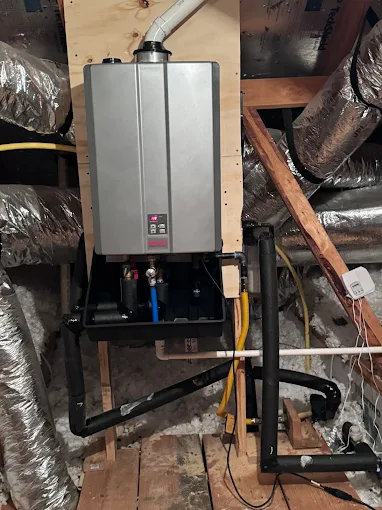
Tankless Water Heater Repair for Strange Noises and Odors
If your tankless water heater in Fort Worth starts making new sounds or releasing odd smells, it is usually trying to tell you something is off. This guide explains the common causes behind unusual noises and odors, what you can check safely, and when to call a professional for tankless water heater service.
Last week, the water in your home may have been working perfectly. Then you noticed it: a popping or banging sound when a shower turns on, and a faint odor that did not used to be there.
Tankless systems can be efficient, but they are sensitive to airflow, gas or electrical supply, and water quality. In Fort Worth, where homes can vary widely in age and plumbing type, the same “tankless” label can hide very different setups.
This guide helps you understand what the noises and smells can mean, what to check first, and how to prepare for a professional tankless water heater repair so the problem gets solved the right way.
Quick Answer
If your tankless water heater makes new noises or produces an unusual odor, stop using hot water for a short period and check for simple, safe clues like error codes, visible leaks, and whether odors seem tied to specific fixtures. Popping or banging often relates to scale or water flow issues, while burning or “rotten egg” smells can point to combustion or gas-related problems. Because ventilation and gas/electrical components are safety-critical, the safest next step is to contact All Source Plumbing for tankless water heater repair in Fort Worth and a proper diagnostic before the issue worsens.
What to Check First
Before you troubleshoot anything mechanical, focus on safety and on gathering information. These checks are homeowner-friendly and can help a technician confirm the cause quickly.
Professional observation: Strange smells plus new sounds are not something to ignore. Even if hot water “still works,” the source could be scale buildup, restricted flow, venting issues, or a problem with the burner or fuel supply.
1) Note when the problem happens
- Only when hot water starts? (common with ignition and flow changes)
- Only at certain fixtures (like a bathroom sink) or everywhere?
- After a period of non-use, or every time the system fires?
2) Look for error codes and control-panel messages
Many tankless models show a code when sensors detect an issue. Write down the exact wording or number. A technician can use that to narrow down the cause faster.
3) Check for visible water around the unit
Even a small drip can lead to corrosion and odor. Look around seams, fittings, and the area where the water lines connect.
4) Check your hot-water supply pattern
If the odor appears mainly at one bathroom or a single fixture, it can be related to that drain or trap rather than the heater. If the odor is tied to hot water across the home, the heater or its venting is more likely.
If you suspect odor or backup issues in drains, you may also want to review drain cleaning services as part of the overall investigation.
Main Things Customers Should Understand
“Strange noises and odors” can come from a few frequent categories. Here is how they typically connect to tankless water heater service needs.
Popping, cracking, or banging
Often points to mineral buildup (scale) or temperature changes as water moves through the heat exchanger. When scale accumulates, it can cause uneven heating and noise.
Burning smell or “hot” odor
Can be tied to normal operation that is not burning correctly, restricted airflow, or issues with combustion. Venting problems can also lead to odor concerns.
Musty or “stale” smell
Sometimes relates to water stagnation, contamination in the water pathway, or odor sources near drains and fixtures. It can also show up when a leak is present and water is sitting somewhere it should not be.
How “scale” leads to noises
Tankless heaters heat water on demand. When mineral deposits build up inside the heat exchanger, they can create hotspots and resistance. That can produce popping or knocking sounds and may contribute to odor complaints if debris gets heated.
How airflow and venting connect to odors
For many tankless units, proper venting is essential for safe combustion. If the vent route or air intake is compromised, odor issues can occur. This is one reason a professional diagnosis matters, especially when an odor is persistent.
When water leaks can masquerade as heater problems
A leak can create dampness, corrosion, and smell. If you have foundation or slab concerns, the odor or noise may not originate in the heater at all. If you need to check for hidden water leak detection, consider reviewing slab leaks and related services.
Practical recommendation: Treat the heater as the suspect when the odor and noise appear during hot-water use across multiple fixtures. If the issue is limited to a single fixture or drain, investigate the plumbing line or drain first.
Comparison: what to do based on the symptom
| What you notice | Likely causes (examples) | Best next step |
|---|---|---|
| Popping or banging during hot water use | Mineral buildup, restricted flow, temperature cycling | Schedule tankless water heater repair and ask about heat exchanger condition and service needs |
| Burning or “combustion-like” odor | Combustion/airflow problems, venting concerns, burner issues | Stop using hot water and have a technician inspect the unit and venting path |
| Odor appears at one fixture only | Fixture drain/trap odor, localized plumbing issue | Inspect that fixture and drain; consider toilet repair and installation only if the odor is linked to that fixture’s operation |
| Wetness near the unit or recurring damp smell | Small leaks at fittings, piping seepage, hidden leak | Have the plumbing connections checked; if you suspect slab-level issues, discuss slab leak location and repair |
Why This Matters in Fort Worth, TX
Fort Worth homes often include a mix of older plumbing layouts and newer upgrades, which can change how a tankless heater performs. When mineral content or flow conditions are different from what the unit expects, you are more likely to notice scale-related noises and performance changes.
Also, many properties have longer pipe runs, shared supply lines, or varied fixture types. That can make it harder to tell whether odors are coming from the tankless heater, the venting route, or a fixture drain. A local technician who services Fort Worth can help sort out which pathway is actually causing the problem.
Get your tankless heater inspected in Fort Worth
If the noise or odor started recently, it is usually better to diagnose sooner than later. All Source Plumbing can evaluate the unit and the surrounding plumbing to determine whether you need tankless water heater repair or service.
Contact All Source PlumbingCommon Mistakes to Avoid
These are the missteps that tend to make tankless heater problems linger or become more expensive.
Professional observation: When a tankless unit shows unusual behavior, guesswork can miss the real cause. Noise and odor can share the same root issue, but they can also point to different problems at the same time.
- Ignoring error codes and continuing to use hot water. Many issues that start as a warning can worsen under load.
- Assuming the smell is “normal” for the heater. If the odor is new or stronger than before, treat it as a sign to inspect.
- Only listening and not checking for leaks. A small leak can create odors that seem like they come from the heater.
- Trying repeated resets without identifying the cause. Resets can temporarily mask symptoms while the underlying issue remains.
- Forgetting that drain odors can be mistaken for heater odors. If the smell is fixture-specific, it may be related to drains rather than the tankless unit.
Customer Checklist
- Record the exact time the noise or odor happens (hot water start, continuous use, after recovery, or after rest).
- Write down any error code or message from the heater’s control panel.
- Check around the unit for moisture, drips, or damp areas near fittings and connections.
- Test hot water at multiple fixtures to see if the odor/noise is whole-home or fixture-specific.
- Confirm whether the odor is fuel-like (burning/combustion) or more like stale/musty water.
- Take a quick photo of the heater area (and vent/air intake area if visible) to help your technician.
Representative Scenario
A homeowner in Fort Worth noticed a “metallic popping” sound whenever the kitchen and bathroom hot water were turned on. The sound was strongest during the first few minutes, then softened. Over two days, they also smelled a faint burning odor near the heater area.
Instead of continuing to run hot water, they paused use and called All Source Plumbing to inspect the unit. The inspection focused on the heat exchanger condition and the setup that affects combustion and venting. That approach helped separate scale-related noise from odor concerns so the repair plan matched what the system was actually doing.
Frequently Asked Questions
Why does my tankless water heater make popping sounds when hot water turns on?
Popping sounds often show up when mineral deposits and heat transfer issues develop inside the unit. Because a tankless heater heats water on demand, temperature and flow changes can amplify noise if the heat exchanger is not transferring heat evenly. Restricted flow, scale buildup, and cycling behavior can also contribute. A professional inspection can confirm whether the heat exchanger needs service and whether water flow and filtration are contributing to the issue.
What should I do if I smell something like burning or fuel near the tankless heater?
If the odor feels like burning or fuel-related and it is new or getting stronger, stop using hot water and have the system inspected. Odor concerns can connect to combustion and airflow, venting, or burner performance. Since tankless units rely on safe operation of fuel and ventilation components, it is not a “wait and see” situation. All Source Plumbing can evaluate the heater and the surrounding setup to identify the cause and the correct repair path.
Could the odor be coming from my drains instead of the tankless water heater?
Yes. If the smell is tied to a single fixture or only appears when you use a specific sink or shower, it may be related to that drain’s trap or a blockage that needs cleaning. Tankless heaters usually produce issues during hot-water demand across multiple fixtures. If you also notice slow drains or gurgling, it may be helpful to address drain lines as part of the overall investigation. Consider reviewing drain cleaning services to rule out drain-related odor sources.
How do I tell if I have a leak that is affecting the heater area?
Look for moisture around the unit, damp spots near plumbing connections, or recurring odors in the same area. Even a small seep can lead to corrosion and smell. If you suspect the leak might be hidden in the slab or near foundation plumbing, the tankless heater may be affected indirectly through nearby supply lines. In that case, it may be appropriate to discuss slab leak location and repair so the source is found without unnecessary damage.
Do I need tankless water heater maintenance or just repairs?
Sometimes the system needs repair because a component is failing or venting and combustion performance is off. Other times, the issue is maintenance related, such as scale buildup that is causing noise or reduced performance. A diagnosis typically determines which category you are dealing with. If you are hearing new sounds or smelling odors, it usually points to a condition that should be inspected first before deciding between maintenance and repair.
Ready for tankless water heater repair in Fort Worth?
If your tankless heater’s noises or odors are new, All Source Plumbing can help you identify the cause and move toward the right fix. Call to schedule a professional inspection and repair.
(682) 760-4912