
Slab Leak Location Checklist: Floors, Moisture, and Sounds
You might not notice a slab leak at first—until your water bill jumps, your floors start feeling warmer in one spot, or you see a stubborn damp patch that won’t match the weather. In Keller and other parts of North Texas, slab foundations are common, and plumbing lines often run beneath concrete floors. When a pipe fails under that slab, the water doesn’t always show up as a dramatic puddle. It can seep slowly, soften soil around the foundation, and quietly damage interior materials before you ever hear a “burst” or see obvious flooding.
Below is a homeowner-friendly checklist you can use to narrow down what to look for—especially when you suspect a hidden water leak or you’re trying to pinpoint the location before repairs.
Quick Answer
If you suspect a slab leak, focus on three detection lanes:
- Floors: temperature changes, recurring dampness, cracks that widen over time
- Moisture indicators: musty odors, rising humidity in one area, warped baseboards
- Sounds and usage clues: running-water sounds, unexplained water use when nothing is on
However, the fastest path to a correct repair is usually professional leak location using controlled testing and non-destructive methods. If you catch it early, the repair is typically far less invasive than waiting for concrete damage to become obvious.
Slab Leak Location Checklist: Floors, Moisture, and Sounds
1) Floor signs that point to under-slab plumbing
These aren’t always dramatic, but they’re often consistent:
- Warm or hot spots: One section of floor feels warmer than the rest, especially near an exterior wall or bathroom/kitchen area where water lines are likely.
- Cracks that change: Hairline cracks can be normal, but slab leaks often show cracks that slowly widen or shift with rising moisture around the pipe.
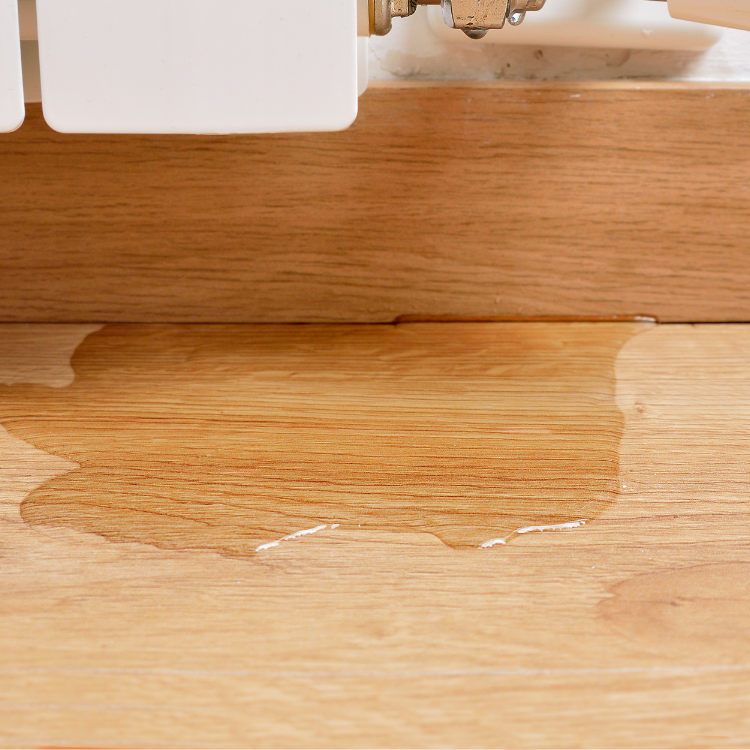
- Soft flooring or lifting: Tile grout may show repeating separation, laminate can bubble, and vinyl can feel slightly “spongy” where water migrates beneath.
- Baseboards that look “freshly damp”: Even if you don’t see standing water, drywall edges and baseboards may show a repeating cycle of moisture.
Firsthand technician observation: In many slab-leak calls, the most telling clue isn’t what’s soaked—it’s what’s consistently different. I’ve seen homeowners describe one bathroom floor as “just warmer” for months, with no puddles at all. When we locate the leak, the pipe failure is often deep enough that water spreads slowly through the concrete and sub-slab voids instead of creating obvious surface flooding.
2) Moisture and odor clues (what to check in a real home)
Look for patterns rather than one-time surprises:
- Musty odor that returns even after cleaning or running a fan
- Discoloration on drywall corners or near plumbing walls
- Carpet padding that stays wetter in one zone
- Ceiling staining below (if you have rooms underneath or certain layouts)
- Humidity that doesn’t match the weather: If HVAC runs normally but one area stays humid, that can indicate moisture loss from beneath.
3) Sounds: when “plumbing noise” becomes a clue
Sounds can help, but they require context:
- Humming, trickling, or a faint “running” when no fixtures are in use
- Water pressure changes that happen without a faucet being turned on
- Intermittent sounds that line up with your household schedule (sometimes leaks intensify when pressure rises)
A word of caution: some noise is normal (expansion cycles, water heater activity, or pressure regulator behavior). The key is whether the sound continues when the system should be quiet.
4) The “quiet house” usage test (quick homeowner step)
This won’t locate the leak precisely, but it helps confirm that a leak is likely.
1. Choose a time when everyone is away and no water is running for at least 1–2 hours.
2. Turn off ice makers and confirm sprinklers are off.
3. Check the water meter:
- If the leak indicator is spinning/moving while nothing is running, you likely have active flow somewhere in the system.
If you want the next step after that confirmation, professional leak location is what narrows the repair zone.
What Homeowners Often Overlook
The biggest blind spot is assuming a slab leak will always show as a wet spot. In Texas, especially with shifting clay soil and seasonal moisture swings, under-slab water can travel along the path of least resistance—sometimes toward expansion gaps, plumbing chases, or edges of the slab—before it shows up inside.
Another overlook: trying to “guess” the pipe location based on where the bathroom sits. Layouts vary. Pipes can run wider than you think, and retrofits over the years can shift where lines actually travel. That’s why slab leak repair succeeds when the repair is matched to the real leak location, not the most likely guess.
Common Mistakes That Lead to Water Damage
Mistake 1: Waiting for a puddle
A slow slab leak can keep moisture under the slab for months. By the time you see visible damage, the soil may have been eroded and the slab may be moving—making the repair more complicated.
Mistake 2: “Fixing” a surface crack without confirming the source
Epoxy or patching a crack can temporarily hide symptoms, but if the leak is still active underneath, the moisture keeps traveling and the problem returns.
Mistake 3: Turning off water and thinking the problem is solved
If you shut off the water long enough, the slab may dry out partially—but the cause remains. When water is turned back on, the leak resumes.
Mistake 4: DIY testing without a baseline
Homeowners sometimes use “bucket tests” and only check one fixture at a time. If the leak is under the slab, it may not correlate neatly with a single fixture’s usage pattern. A structured leak location service is usually more reliable.
Our Experience Diagnosing Plumbing Problems in Texas Homes
In Keller-area homes, we commonly see slab leaks linked to a few practical realities:
- Older plumbing materials and aging joints under concrete
- Pressure cycling from water heaters and irrigation schedules
- Soil movement around foundations due to seasonal changes
One recurring pattern I’ve noticed: slab leaks often worsen after a long stretch of stable conditions—then accelerate when water usage increases (holidays, guests, or sprinkler system adjustments). That doesn’t mean the leak “started then.” It often means the leak rate increased enough to trigger new symptoms.
Repair, Diagnostics, and Prevention Checklist
Step-by-step: what to do when you suspect a slab leak
1) Confirm possible leak activity
- Do the quiet-house meter check.
- If your meter suggests flow when nothing is running, treat it as an active leak until proven otherwise.
2) Look for location hints
Use the floor, moisture, and sound checklist above. Mark suspected zones.
3) Get a leak location service
Professional diagnostics reduce unnecessary concrete removal. Depending on the situation, teams may use controlled testing and non-destructive approaches to narrow down the plumbing line.
If you want to understand how technicians verify pressure and flow behavior during diagnosis, you can review hydro-static testing as part of the broader leak detection workflow.
4) Plan the repair method
Common repair paths include targeted slab leak plumbing repair (when location is confirmed) or more involved work when multiple sections are affected.
For a deeper look at what typically happens during slab leak troubleshooting and repair planning, see slab leak location and repair.
What repair recommendation usually depends on
A good diagnostic process answers:
- Where is the leak? (under-slab line segment)
- How severe is it? (active flow rate, pressure loss, moisture spread)
- Is it isolated or recurring? (one failed joint vs. multiple weak points)
If the leak is confirmed and located precisely, repairs can often be targeted. If the plumbing run is deteriorating, a more comprehensive approach may be recommended.
For example, if the leak is in a known under-slab segment and there’s concern about nearby pipe integrity, you may hear discussion of under slab leak detection and repair strategies tailored to the line type and condition.
Prevention / maintenance checklist (what homeowners can actually do)
- Track water bills: Sudden increases without usage changes are a red flag.
- Inspect for repeating moisture: Check bathroom/kitchen edges and any “mystery” damp spots.
- Listen during quiet hours: If you hear water flow when everything is off, investigate.
- Watch pressure behavior: Notice if pressure drops or fluctuates.
- Maintain water heater performance: Sediment and pressure cycling can contribute to stress on plumbing components.
- Fix small drips fast: Tiny leaks can indicate broader system wear.
A realistic anonymized case (how location changes the repair)
A North Texas homeowner called after noticing their water meter moved slowly overnight. No puddles appeared, and the floor looked normal. We performed structured leak detection to confirm active flow and then narrowed the suspected line based on pressure behavior and moisture indicators.
Instead of opening random sections of the slab, the team identified the most likely plumbing segment and recommended a targeted slab leak repair. The homeowner avoided unnecessary concrete removal in other areas—one of the biggest reasons correct leak location matters for cost and long-term reliability.
Optional Comparison: Professional Leak Location vs. “Guess-and-Open”
| Approach | What it typically finds | Risk | Homeowner impact |
|---|---|---|---|
| Guess-and-open (random concrete cuts) | Often partial or delayed confirmation | High: can miss actual leak or disturb unrelated plumbing | More cost, more disruption, longer timeline |
| Leak location service (structured diagnostics) | Most likely leak segment before repair | Lower with the right tools and process | Targeted repair, less unnecessary demolition |
Keller and North Texas Relevance: Why Slab Leaks Behave Differently Here
In the Keller area, homes are exposed to the same plumbing fundamentals as anywhere else—but the environment adds pressure. Seasonal temperature swings and the way Texas clay soil expands and contracts can influence how moisture moves under slabs. It’s also common to see pressure cycling from irrigation schedules and large summer water usage patterns, which can stress aging supply lines over time.
That’s why we focus on pattern recognition (what’s changing, where, and when) and confirmed leak location—not just visible damage.
FAQ
How do I know if my problem is a slab leak versus a toilet leak or outdoor irrigation issue?
Start with a quiet-house meter check. If the meter indicates flow when no fixtures are running and sprinklers are off, it points toward a system leak. Toilet leaks often show up as continuous tank refilling or a recurring bowl change; irrigation leaks usually correlate with watering schedules. If you can’t confidently eliminate those, professional leak location is the safest next step.
What does “non-destructive slab leak detection” mean?
It means identifying the leak location with minimal or no concrete removal when possible. Depending on the situation, technicians may use pressure/flow testing and moisture/sonic indicators to narrow down the line segment. If the leak is still confirmed but access is required, the goal is to keep openings targeted to the smallest necessary area.
Can a slab leak happen without visible water damage?
Yes. Many slab leaks are slow and distribute moisture under the slab rather than creating puddles. You might notice warm spots, musty odors, slight floor softness, or gradual crack changes instead. That’s why water meter behavior and structured diagnostics matter.
Is slab leak repair always the same process?
No. Repair method depends on the leak location, pipe material, and whether the surrounding plumbing shows additional wear. Some repairs are localized; others may involve replacing a section or planning a broader plumbing solution if multiple failures are likely.
Ready to Protect Your Home From Plumbing Damage?
If you’re seeing unexplained water use, recurring moisture, or floor changes that don’t match normal household activity, don’t wait for the damage to become obvious. Early diagnostics can prevent costly foundation and interior repairs—and help ensure the slab leak repair is targeted to the actual leak location.
About All Source Plumbing
All Source Plumbing provides slab leak detection, leak location service, slab leak repair, drain repair, sewer diagnostics, hydro jetting, tankless water heater services, and emergency plumbing repairs throughout Keller, TX and surrounding North Texas communities. The company focuses on accurate plumbing diagnostics, long-term repair solutions, preventative maintenance, and helping homeowners protect their properties from costly water damage through professional plumbing services.