
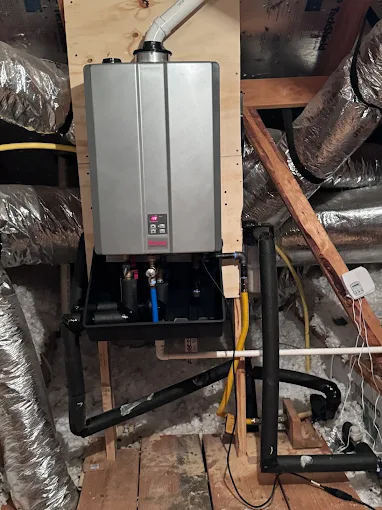
Tankless Water Heater Repair When Hot Water Fades
If your Fort Worth, TX showers start hot and then turn lukewarm, the issue is usually a flow, temperature, venting, or internal maintenance problem. This guide walks you through what to check first, what usually causes fading hot water, and when it’s time to call for professional tankless water heater service.
It happens fast. One morning the water feels great, then a few minutes into the shower it cools down like the heater can’t keep up.
If you’re seeing that pattern in Fort Worth, TX, you’re probably dealing with a tankless water heater that’s not controlling temperature properly. The fix can be simple, or it can involve deeper service like cleaning, venting checks, or internal repairs.
This guide helps you understand the most common reasons hot water fades, how to narrow down the cause without guesswork, and what to tell a plumber when you call for help.
Quick Answer
If your tankless water heater delivers hot water at first and then fades, start by checking flow rate at the showerhead and any clogged aerators, then verify the unit’s temperature settings and that the heater is receiving steady gas or power. If the problem repeats across multiple fixtures, it often points to mineral buildup, a venting/air supply issue, or a component that needs tankless water heater repair. A professional tankless water heater service technician can inspect performance and run safe diagnostics so you avoid trial-and-error.
What to Check First
Before you schedule service, you can usually identify whether this is a fixture issue, a flow issue, or a heater performance issue. Here’s a practical order that works well for homeowners in Fort Worth, TX.
1) Check the showerhead and aerator
Remove and rinse the showerhead or faucet aerator. Sediment and scale can restrict flow. Even a small restriction can cause the heater to behave inconsistently and cool down after it starts heating.
2) Compare hot water across fixtures
Test a different hot-water faucet or another shower. If hot water fades everywhere, the heater is more likely to be the cause. If it’s only one fixture, the problem is often localized.
3) Look for temperature setting changes
If someone adjusted the temperature controls recently, return them to your normal comfort setting and test again. Incorrect settings can make the unit cycle and feel like “hot water fading.”
Professional observation: When hot water fades after a few minutes, it commonly aligns with reduced flow, mineral buildup inside the unit, or a venting and air supply problem that affects stable operation. Checking flow and fixtures first helps you narrow the cause quickly.
Main Things Customers Should Understand
Tankless water heaters are designed to heat water on demand. That means performance depends on consistent flow, proper combustion or electric heating operation, and the unit staying within its safe operating range. When one of those pieces is off, you may get a “hot then lukewarm” experience.
1) Mineral scale buildup (a frequent cause)
Over time, minerals can build up inside the heat exchanger. As buildup increases, the heater has a harder time transferring heat efficiently. The result is often water that starts hot but cools as the unit struggles to maintain temperature.
If you have hard water or you’ve never had the unit serviced, this becomes more likely. A tankless water heater maintenance approach can include flushing and internal checks, and tankless water heater repair may be needed if performance has already dropped.
2) Flow restrictions and inconsistent water delivery
Even if the heater is functioning, restricted flow can cause temperature swings. Common culprits include clogged showerheads, partially closed valves, or sediment in the system.
If you suspect a larger plumbing restriction, exploring drain issues can also help. For example, if you’re dealing with slow drains or recurring clogs, see All Source Plumbing drain cleaning services to rule out overall flow problems elsewhere in the home.
3) Venting and air supply concerns
Tankless units rely on correct venting and air intake to operate safely and efficiently. If venting is obstructed or installed in a way that isn’t operating as expected, you can see unstable heating and temperature drop-offs.
This is one of those areas where homeowners should avoid “fixing by guessing.” A professional inspection helps confirm whether the unit’s venting and air supply are within safe parameters.
4) Temperature control behavior
Some systems manage temperature by adjusting heat output as flow changes. If flow drops or fluctuates, the unit may reduce heating, which can feel like the water fades. That’s why comparing fixtures and checking aerators is a good first step.
5) When it’s time to think about broader plumbing issues
Sometimes hot water fading is actually a sign of a related plumbing problem such as a water line issue. If you’ve also noticed unusual dampness, cracks, or water loss indicators, it’s worth considering hidden leak detection and leak location service.
If you’re also concerned about leaks in concrete areas, you may want to review leak location and repair options.
Decision tip: If hot water fades across multiple fixtures, repeats the same way every day, and cleaning aerators does not help, it’s usually not a “simple adjustment” and is a strong signal for professional tankless water heater service.
Why This Matters in Fort Worth, TX
Fort Worth homes often have a mix of older plumbing components and newer water-saving fixtures. When a tankless water heater is paired with restricted showerheads or certain faucet flow controls, the heater can respond more noticeably to changes in flow. That makes “hot then lukewarm” behavior more common than people expect.
Also, routine household water use patterns in the area can be heavy during mornings and evenings. If multiple fixtures run close together, the heater’s ability to maintain a stable temperature depends on consistent demand and adequate system performance. A service visit can help confirm whether the unit is operating as intended or if mineral buildup and internal wear are affecting output.
| What you notice | Most likely cause | What to do next |
|---|---|---|
| Hot water starts strong, then fades after a few minutes | Mineral buildup, temperature control cycling, or unstable heat transfer | Schedule tankless water heater repair or tankless water heater maintenance so performance can be checked safely |
| Only one shower or faucet fades | Clogged aerator or restricted fixture flow | Clean aerator/showerhead first, then test again |
| Temperature varies when other fixtures are used | Flow fluctuations and demand changes | Test fixtures separately; ask a technician to evaluate heater performance under your typical use |
| Fading plus signs of leaks or dampness in walls or near slabs | Potential hidden water leak affecting supply | Consider professional leak detection and leak location service before continuing troubleshooting |
Need tankless water heater service in Fort Worth?
If your hot water fades after it starts, All Source Plumbing can help diagnose the cause and recommend the right repair path for your setup.
Explore tankless water heater repair & installationCommon Mistakes to Avoid
When hot water fades, it’s tempting to keep adjusting controls or to assume it’s “normal cycling.” Those shortcuts can waste time and may hide the real issue.
- Keeping the temperature set too high for your typical flow can make the unit cycle in a way that feels like fading. Return to your normal setting and test under similar conditions.
- Only checking one fixture can miss system-wide performance problems. Compare at least one other hot-water faucet or shower.
- Ignoring venting and air supply concerns can lead to unsafe operation or repeated failures. Leave vent-related checks to a qualified technician.
- Trying repeated “reset” attempts without identifying the pattern can delay real repairs if the heater needs cleaning or component service.
- Assuming it’s the shower when the issue appears everywhere. If multiple fixtures fade the same way, the heater is the better place to focus.
Customer Checklist
Use this checklist before you call. It helps your technician understand what you’ve observed and speeds up the troubleshooting process.
- When does the fading happen (for example, after 2 minutes, 10 minutes, or only during heavy use)?
- Does it happen at every hot-water fixture or only one?
- Have you cleaned showerheads or faucet aerators recently, and did it change anything?
- Have you noticed any unusual noises from the heater during the fade?
- Any recent changes to the home plumbing, water filters, or temperature settings?
- Any signs of leaks (dampness, musty smells, or unexpected water usage patterns)?
Representative scenario (Fort Worth homeowner)
A homeowner in Fort Worth reported that the first few minutes of a shower felt hot, but after a short time the water cooled to lukewarm. They cleaned the showerhead and confirmed the problem still happened in a second bathroom faucet. The pattern suggested the tankless unit could not maintain stable heating under normal demand, so the next step was professional tankless water heater service to inspect performance and address internal issues rather than keep adjusting settings.
Frequently Asked Questions
Why does my tankless water heater start hot and then turn lukewarm?
This pattern usually points to a performance limitation after the heater has been running for a short time. Common causes include mineral buildup that reduces heat transfer efficiency, temperature control behavior that responds to flow changes, or a flow restriction that develops as water demand shifts. If cleaning aerators and testing multiple fixtures does not fix it, it’s a good sign to schedule tankless water heater repair or maintenance so the unit can be diagnosed properly.
Could a clogged showerhead cause hot water fading?
Yes. If the showerhead or faucet aerator is partially clogged, the flow can become restricted and inconsistent. Tankless water heaters rely on stable demand, so restricted flow can lead to temperature swings that feel like “hot water fades.” That’s why checking aerators and comparing different fixtures is the first step. If hot water fades everywhere, the heater is more likely the primary issue than the showerhead.
What should I check before calling for tankless water heater service?
Start with simple, safe checks: clean the showerhead/aerator, verify your temperature setting is where you normally keep it, and test at least one other hot-water fixture to see whether the problem is localized. If the issue happens across multiple fixtures, repeats consistently, or involves unstable temperatures during normal use, professional diagnostics are the next step. That helps avoid guesswork and focuses the repair on the actual cause.
Is hot water fading related to leaks or slab issues?
Sometimes. A hidden water leak can change how water is delivered to fixtures, which may affect how the tankless heater performs. If you also notice damp spots, unexplained water usage, or signs near concrete areas, it’s worth considering leak detection and leak location service. In cases involving slab plumbing, non-destructive slab leak detection may be especially relevant. A technician can help determine whether the heater issue is actually tied to a leak.
How do I decide between tankless water heater repair and replacement?
The decision depends on what’s causing the fading hot water and how much of the system needs service. Repair is often the next step when diagnostics point to a specific component or clear issue such as internal performance problems. Replacement may be discussed when the unit’s overall condition or repeated failures suggest that repairs may not restore stable performance. Your service technician can review the findings and explain the most practical option for your setup in Fort Worth.
Get help for tankless water heater repair in Fort Worth
If your hot water fades after it starts, All Source Plumbing can help you pinpoint the cause and move forward with the right tankless water heater service plan.
(682) 760-4912