
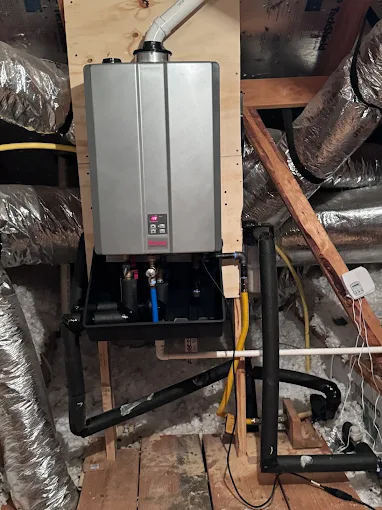
Tankless Water Heater Repair: Fault Codes Explained Simply
It’s a chilly North Texas morning in Keller, you turn on the shower, and instead of steady hot water, you get a blast of cold—and a strange code blinking on your tankless water heater. No hot water. No explanation. Just letters and numbers that might as well be another language.
Tankless water heaters are efficient and long-lasting, but when something goes wrong, they speak in fault codes, not plain English. For Keller homeowners and small businesses that rely on endless hot water—restaurants, salons, clinics—understanding what those codes mean can be the difference between a quick fix and an expensive emergency.
Industry studies show that most tankless failures start as minor issues: scale buildup, gas supply problems, or venting restrictions. Many of these are preventable or fixable if you know what the unit is trying to tell you.
This guide breaks down tankless water heater fault codes in simple terms, explains what you can safely check yourself, and shows when it’s time to call a professional. You’ll also see how these issues connect to bigger plumbing problems like leaks, gas supply, and drainage in your Keller home or business.
Key Insight: When you understand what your tankless water heater’s fault codes mean, you can respond faster, prevent damage, and often avoid a full system failure or costly replacement.
How Tankless Water Heater Fault Codes Actually Work
Tankless water heaters are essentially small computers wrapped around a powerful burner or heating element. Inside the unit are sensors that constantly watch:
- Water temperature (incoming and outgoing)
- Flow rate
- Gas pressure and flame quality (gas units)
- Exhaust temperature and venting
- Internal electronics and safety devices
When something falls outside the safe range, the control board stores and displays a code. Each manufacturer—Rinnai, Navien, Noritz, Rheem, Bosch, etc.—uses its own numbering, but the categories of problems are similar: ignition, combustion, temperature, flow, sensor, and communication errors.
“Modern tankless systems are designed to fail safe. A fault code is the unit’s way of saying, ‘Something’s off—fix this before I damage myself or your home.’” — Senior Tech, All Source Plumbing
In Keller, we see a lot of fault codes triggered by:
- Hard water scale (very common in North Texas)
- Inadequate gas supply due to undersized lines or other appliances
- Venting restrictions from wind, nesting, or improper installation
- Hidden leaks that change pressure and flow
A real example: A homeowner in North Fort Worth kept getting intermittent fault codes and shutdowns. They thought the heater was “just old.” After testing, we discovered a small under-slab leak that was messing with water pressure and causing the unit to misread flow. Once we performed Hidden Water Leak Detection and repaired the line, the tankless system ran perfectly—no replacement needed.
The Most Common Fault Code Categories (And What They Mean)
Every brand labels codes differently, but most fall into a few core categories. Understanding the category helps you decide whether to reset, inspect, or call for help.
1. Ignition and Flame Failure Codes
These typically show up when:
- The burner can’t light
- The flame won’t stay lit
- Gas pressure is too low or unstable
In Keller, we often trace these to gas supply issues—undersized gas lines, too many appliances on the same line, or problems that require a professional Gas Tankless Water Heater specialist. Sometimes it’s as simple as a dirty flame sensor or blocked intake.
Case in point: A small Keller café kept losing hot water during busy brunch hours. Their tankless unit threw repeated ignition codes. Our diagnostic testing showed that when all gas appliances were running (stoves, heaters, water heater), the gas line pressure dropped below the tankless minimum. We upgraded their gas line, and the fault codes disappeared.
“If ignition or flame codes keep returning after a reset, don’t keep trying—shutting down is a safety feature, not an inconvenience.”
2. Overheat and Temperature Fluctuation Codes
These usually mean:
- The water is too hot inside the heat exchanger
- There’s restricted flow from scale buildup or clogged filters
- A temperature sensor is malfunctioning
North Texas hard water is a frequent culprit. Without regular Tankless Water Heater Maintenance, mineral scale narrows passages, slows flow, and overheats the system. That triggers codes not just for temperature, but sometimes for flow and combustion as well.
3. Flow and Circulation Codes
These appear when:
- The unit doesn’t detect enough water flow
- A filter or inlet screen is clogged
- There’s a leak or restriction in the plumbing
We recently helped a homeowner in Keller who saw a “low flow” code every time they tried to run a shower and washing machine at the same time. Their tankless filter was partially clogged, but the bigger issue was a slow slab leak. Using Professional Leak Detection, we found and repaired the line, and the flow codes stopped.
What You Can Safely Check Yourself vs. What Needs a Pro
Tankless fault codes don’t always mean you’re in for a major repair. Some are triggered by minor conditions you can safely address. Others involve gas, electricity, or internal components and should be left to a licensed plumber.
Here’s a practical breakdown.
Safe DIY Checks
You can usually handle:
- Power reset
- Turn the unit off, wait 30 seconds, turn it back on.
- This can clear one-time glitches from power blips or brief flow interruptions.
- Water filter / inlet screen inspection
- Many units have an accessible filter on the cold water inlet.
- Shut off water, remove the screen, rinse debris, reinstall.
- Vent and air intake visual check
- From the exterior, look for nests, leaves, or debris blocking intake or exhaust.
- Do not disassemble venting; just clear obvious obstructions.
- Check other fixtures for pressure problems
- If multiple faucets have low pressure, the fault may be part of a larger plumbing issue, not the heater alone. That’s when services like Residential Leak Detection can be crucial.
When to Call a Professional
You should not attempt:
- Adjusting or testing gas pressure
- Opening the sealed combustion chamber
- Rewiring or bypassing sensors
- Disassembling internal water or gas piping
- Overriding safety shutdowns or jumpers
“Any repair that involves gas, sealed combustion, or internal electronics should be performed by a licensed professional. A bad DIY fix can turn a minor repair into a safety hazard.” — Master Plumber, All Source Plumbing
In Keller, we frequently combine tankless diagnostics with broader Water, Sewer & Gas Diagnostics because a fault code is often a symptom of a bigger system issue.
Hard Water, Scale, and Why Keller Homes See So Many Tankless Issues
Keller and much of Tarrant County sit on mineral-rich soil. That means hard water—high in calcium and magnesium. Over time, those minerals:
- Coat the inside of your heat exchanger
- Restrict water passages
- Reduce heat transfer efficiency
- Cause overheating and temperature fault codes
Manufacturers typically recommend annual or biannual descaling in hard water areas. Skipping this maintenance can cut the life of your tankless unit dramatically and lead to constant error codes.
Real Local Example
A Keller family called us for repeated overheat and temperature codes on a 7-year-old tankless heater. They had never had it flushed or descaled. Inside, the heat exchanger was heavily scaled, and the unit ran extremely hot even at moderate settings.
We performed a full descaling, replaced a temperature sensor that had been over-stressed, and added a whole-home Water Filter & Softener system. Their hot water became stable, and the error codes stopped.
Traditional vs. Modern Approach to Hard Water Protection
| Approach | Upfront Cost (Keller area) | Ongoing Costs | Impact on Fault Codes | Typical Lifespan Benefit |
|---|---|---|---|---|
| No Treatment (Do Nothing) | $0 | High (repairs, energy) | Frequent scale-related shutdowns | Shortened tankless life |
| Periodic Descaling Only | Low–Moderate | Scheduled service fees | Reduces scale-related codes | Extends life, but scale still forms |
| Full Softener + Descaling | Moderate | Salt & annual service | Minimizes scale and temperature codes | Maximizes tankless lifespan |
For many Keller homeowners, pairing a softener with routine maintenance is the sweet spot: fewer fault codes, more consistent hot water, and lower long-term costs.
When a Tankless Fault Code Signals a Bigger Plumbing Problem
Not every error is just about the heater. Sometimes, the tankless unit is the “messenger” alerting you to wider issues in your plumbing, gas, or drain system.
Signs the Problem Is Bigger Than the Unit
- Multiple fixtures show low pressure or fluctuating flow
- Hot water issues coincide with slab cracks or damp flooring
- You hear water running when everything is off
- There are sewer or drainage problems at the same time
In these situations, your tankless heater may throw:
- Flow errors (because water is escaping through a leak)
- Overheat codes (from restricted flow due to debris or partial blockages)
- Ignition errors (from gas line undersizing or damage)
We had a Keller homeowner with repeating flow and temperature codes. Their flooring near the kitchen felt slightly warm, and their water bill had crept up. Our team performed Slab Leak Detection and found a hot water line leaking under the slab.
After performing Concrete Slab Leak Repair and stabilizing the pressure, the tankless codes stopped without replacing the unit.
In more severe cases, we may recommend:
- Drain Line Replacement if roots or collapse are impacting flow
- Piping & Repiping for corroded or undersized lines
- Drain Cleaning Services or Hydro Jet Drain Cleaning if buildup is affecting performance
“A tankless fault code is sometimes the first visible symptom of an invisible leak or failing pipe system under your Keller home.”
Repair vs. Replacement: Reading the Signs from Your Fault Codes
Repeated fault codes can raise an important question: Should you keep repairing your tankless system or start planning for a replacement?
Factors That Point Toward Repair
You’re often better off repairing when:
- The unit is under 10–12 years old
- The fault code is clearly tied to a fixable issue (sensor, scale, minor part)
- There’s no extensive internal corrosion or heat exchanger damage
- The unit was sized and installed correctly for your home or business
In these cases, targeted Tankless Water Heater Repair, descaling, or component replacement can restore full performance.
Factors That Point Toward Replacement
Replacement becomes more likely when:
- The unit is older than 12–15 years
- Heat exchanger is cracked or heavily damaged
- You’re seeing multiple different fault code types over time
- The system was undersized from the start, causing chronic issues
- Repair parts are rare, costly, or backordered
We recently worked with a Keller homeowner whose 15-year-old unit had escalating issues: ignition faults, temperature codes, and intermittent shutdowns. The heat exchanger showed signs of long-term overheating. Instead of continuing to pour money into repairs, we installed a new high-efficiency Water Heater Replacement, sized correctly for their growing family.
Cost & Benefit Snapshot for Keller Homeowners
| Option | Typical Keller Cost Range | Pros | Cons |
|---|---|---|---|
| Single Component Repair | Low–Moderate | Fast, affordable, extends life | May not fix underlying sizing issues |
| Full Service + Descale | Moderate | Improves efficiency, stops nuisance codes | Needs repeating every 1–2 years |
| New Tankless Installation | Higher upfront | Warranty, efficiency, fewer repairs | Higher initial investment |
A trusted local plumber can interpret your fault history and help you decide which path makes the most sense for your budget and long-term plans.
What This Means for Homeowners and Businesses in Keller, TX
For Keller residents, tankless water heater fault codes aren’t just a technical curiosity—they’re a real-world disruption. Restaurants lose customers when there’s no hot water for dishes. Salons can’t operate normally without consistent hot water. Homeowners face cold showers and potential property damage if leaks or gas issues go unchecked.
A few local realities make this topic especially important:
- Hard Water: Keller’s mineral-heavy water accelerates scale buildup, which leads directly to many temperature and overheat codes.
- Slab Foundations: Most homes sit on slabs, making hidden leaks more likely and more destructive. Fault codes related to flow or temperature can be early warnings of a slab leak.
- Growing Households and Businesses: As families add bathrooms or businesses expand, existing gas and water lines may no longer be correctly sized, triggering ignition and flow faults.
Working with a local team that understands these conditions means faster, more accurate diagnosis. Instead of just “resetting” or swapping parts, a knowledgeable plumber looks at your entire system—water quality, gas supply, drainage, and leak risk.
For many Keller property owners, the smartest approach is proactive:
- Schedule regular Tankless Water Heater Service and descaling
- Consider Water Filter & Softener options to protect the unit
- Use professional Leak Detection Near Me when you see suspicious changes in pressure, bills, or flooring
- Address drain and sewer issues with Sewer Drain Repair before they cause system-wide problems
Understanding your fault codes is the first step. Pairing that knowledge with expert support keeps your hot water reliable and your property protected.
Frequently Asked Questions
Q: My tankless heater keeps showing the same fault code even after I reset it. Is it safe to keep using it?
A: If the same code returns after one or two resets, it’s a sign the underlying problem hasn’t been resolved. Continuing to force the unit to run can cause internal damage or, in the case of gas-related or overheat codes, create safety risks. In Keller, repeated codes often stem from hard water scale, inadequate gas pressure, or hidden leaks affecting flow. At that point, it’s best to schedule a professional inspection and, if needed, Tankless Water Heater Repair rather than relying on resets.
Q: Could a slab leak really cause my tankless water heater to throw error codes?
A: Yes. A slab leak—especially on a hot water line—can change pressure and flow in ways your tankless system interprets as a fault condition. You might see low flow, temperature, or even overheat codes because water is escaping under the slab instead of reaching fixtures. In Keller, where most homes are built on slabs, this is more common than many owners realize. If you notice warm spots on floors, higher water bills, or running water sounds along with fault codes, consider Slab Leak Location and repair as part of your diagnostic plan.
Q: How often should I have my tankless water heater serviced in Keller’s hard water conditions?
A: For most homes in Keller, annual service is a smart baseline. That usually includes descaling the heat exchanger, cleaning filters, checking sensors, and reviewing venting and gas supply. In homes with very hard water and no softener, service every 6–12 months may be necessary to prevent scale-related fault codes. Pairing regular maintenance with a Water Filter & Softener system is one of the best ways to minimize error codes and extend the life of your unit.
Q: Are all tankless fault codes expensive to fix?
A: Not at all. Some codes are triggered by relatively simple issues: a clogged inlet screen, minor sensor failure, or small venting obstruction. These can often be resolved quickly and affordably. More complex codes—especially those related to a damaged heat exchanger, major gas issues, or system-wide leaks—can be more involved. A thorough diagnostic, sometimes including Water, Sewer & Gas Diagnostics, helps ensure you’re paying to fix the right problem instead of guessing and replacing parts unnecessarily.
Q: My tankless unit throws error codes mostly when multiple fixtures are running. What does that mean?
A: That pattern often suggests a flow or gas supply limitation. When several showers, appliances, or commercial fixtures run at once, the system may not be getting enough water flow or gas pressure to maintain proper operation. Your heater might be undersized, your gas line might be too small, or there could be restrictions in your piping or drains. In some Keller homes, partial blockages requiring Drain Repair Service and cleaning also contribute. A licensed plumber can evaluate your system capacity and recommend solutions such as repiping, gas line upgrades, or a properly sized replacement unit.
Q: Can drain or sewer problems cause tankless heater issues?
A: Indirectly, yes. Severe drain or sewer blockages can affect how water moves through your system, especially in recirculating or complex plumbing setups. Backups can also lead to moisture intrusion and corrosion around the unit. In Keller, older homes sometimes have combined issues: aging drain lines, partial collapses, and tankless systems working harder to compensate. Addressing underlying issues with Sewer Repairs or Main Drain Line Repair can stabilize your plumbing system and reduce the strain on your water heater.
Q: How do I know if I should repair or replace my tankless water heater after repeated codes?
A: Age, condition, and repair history are key. If your unit is under 10–12 years old and the codes point to specific, fixable issues (like sensors, valves, or scale), repair is often the most cost-effective choice. If it’s 12–15+ years old, has a damaged heat exchanger, or has a long history of different faults, it may be more economical to invest in a new Tankless Water Heater Replacement. A trusted local plumber can review fault histories, inspect the system, and give you a clear recommendation with cost comparisons.
Ready to Get Started?
Fault codes are your tankless water heater’s early warning system. Ignoring them—or just resetting the unit repeatedly—can lead to breakdowns at the worst possible time: holiday gatherings, busy business hours, or cold winter mornings in Keller.
Addressing issues now helps you:
- Restore reliable hot water for your home or business
- Prevent hidden damage from leaks, scale, or gas problems
- Extend the life of your tankless system and avoid premature replacement
If you’re seeing recurring codes, experiencing fluctuating hot water, or suspect a leak or drain problem, the next step is straightforward: schedule a professional diagnostic. All Source Plumbing can test your unit, inspect your plumbing system, and provide clear options—whether that’s a simple repair, targeted maintenance, or a long-term upgrade.
You don’t have to decode those fault messages alone. Get expert help from a local team that understands Keller’s water, soil, and building conditions—and cares about protecting your property.
About All Source Plumbing
All Source Plumbing is a locally owned, full-service plumbing company based in Keller, TX. Our licensed technicians specialize in Tankless Water Heater Service, leak detection, sewer and drain repairs, and comprehensive plumbing diagnostics. With years of experience in North Texas, we understand the unique challenges of hard water, slab foundations, and rapidly growing homes and businesses. From emergency repairs to long-term system upgrades, we provide honest recommendations and high-quality workmanship for Keller and the surrounding communities.