
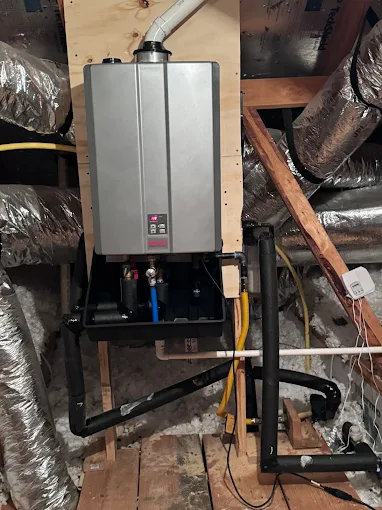
Tankless Water Heater Repair: Eliminating Strange Noises
A lot of homeowners in North Texas don’t notice their tankless water heater until it starts acting “off.” One afternoon everything seems normal—then you hear it: a sharp clicking, a rumbling that didn’t used to be there, or even a banging sound when the unit kicks on.
In the Keller area, that’s especially concerning because homes often run on a mix of older plumbing lines, variable water pressure, and (in many neighborhoods) water that can be harder than people expect. If your tankless is making strange noises, it’s not just annoying. Those sounds usually point to mineral buildup, scale in the heat exchanger, water flow issues, or sometimes a venting/combustion problem. Any of those can shorten the life of the unit and increase the chance of leaks or shutdowns.
Quick Answer
Strange noises from a tankless water heater are commonly caused by mineral scale buildup, restricted water flow, air in the plumbing, or pressure/temperature fluctuations. The safest next step is a professional diagnosis: check error codes (if applicable), verify inlet water temperature and flow rate, inspect filters/screens, and evaluate the heat exchanger for lime scale. If the unit is making loud banging/rattling sounds, don’t keep running it—have it inspected promptly.
What We Commonly See in North Texas Tankless Systems
In my experience troubleshooting tankless heaters around Keller and nearby communities, the “noise story” usually follows a pattern:
- Clicking or ticking when the unit turns on: often tied to internal valves, ignition control, or flow sensing. Some clicking is normal, but it should be consistent—not sudden, harsh, or escalating.
- Rumbling, hissing, or popping: commonly mineral scale affecting water flow and heat transfer. Scale can trap heat in the exchanger, causing uneven expansion and contraction.
- Banging (the “hammer” sound): often linked to water pressure changes or water hammer—especially when other plumbing fixtures cycle on/off.
- Rattling or scraping: can occur if parts are loose, air is present, or debris has collected in a way that affects flow.
A firsthand technician observation I can share: when we pull the inlet filter/screen and it’s visibly restricted, the noise typically gets worse over the next few days. The system starts working harder to maintain temperature, and that “overworking” shows up as rumble or popping—especially during showers or simultaneous faucet use.
Signs You May Have a Hidden Problem (Beyond the Noise)
Noise alone can be misleading, so we look for accompanying symptoms:
- Hot water takes longer to reach the tap than it used to
- Temperature swings (water goes hot → cooler → hot again)
- Reduced flow from one or more fixtures
- Frequent shutdowns or error codes
- Visible water around the unit or moisture on nearby piping
- A sulfur/rotten smell (sometimes indicates combustion/venting issues, or gas-related concerns depending on the model)
What Homeowners Often Overlook
Many people assume tankless heaters either “work or they don’t.” In reality, tankless units can degrade quietly for weeks:
- Mineral scale builds gradually, and the first noticeable symptom is often sound—not temperature.
- A partially clogged inlet filter can create flow restriction that doesn’t completely stop hot water, but it changes how the unit heats and cycles.
- Water pressure variations in the household can trigger banging or popping that seems random until you notice it happens when sprinklers kick on or when a laundry cycle starts.
Common Mistakes That Lead to Water Damage
Here are the mistakes we see most often—especially when homeowners try to handle it themselves:
1. Ignoring escalating noise
- What starts as a light rumble can become a sign of heat exchanger scaling or pressure-related hammering. If it’s worsening, it’s time for a diagnostic.
2. Flushing without confirming the cause
- Many homeowners flush the unit hoping it fixes everything. If the real issue is water pressure control, air in the line, restricted supply, or a venting/combustion fault, flushing may only delay the problem.
3. Using incorrect cleaning chemicals or procedures
- Tankless maintenance needs to match the unit type and manufacturer guidance. Wrong solutions or improper flushing can damage internal components or leave scale behind.
4. Assuming “no leak” means “no problem”
- Some failures start inside—on the heat exchanger or around internal seals—before any water shows up externally.
5. Trying to silence it instead of fixing it
- Loose mounting, worn parts, or vibration can be symptoms. If you just tighten or reposition the unit without diagnosis, you may miss the underlying performance issue.
Repair vs Replacement: What We Recommend (And Why)
When we diagnose tankless noise complaints, we generally end up in one of three paths:
1) Maintenance/Service (Most common when noise is mineral-related)
Recommendation: descaling/flush service, inlet filter cleaning, and verification of flow and temperature settings.
Why: mineral buildup changes how the heat exchanger transfers energy, and that often becomes audible before it becomes a full failure.
2) Repairs (When components or safety systems are affected)
Recommendation: repair of specific parts—often related to valves, sensors, or internal assemblies—after confirming the exact fault.
Why: some failures produce noise plus cycling, error codes, or inconsistent temperature.
3) Replacement (When multiple symptoms overlap)
Recommendation: tankless water heater replacement when noise is tied to significant exchanger wear, repeated shutdowns, or when diagnostics show the unit can’t maintain safe operating temperatures efficiently.
Why: at a certain point, repairs don’t restore performance and you’re paying to chase a problem that keeps returning.
If you’re deciding between repair and replacement, a helpful benchmark is how the unit behaves under load (multiple fixtures) and whether the exchanger and safety systems can maintain stable operation.
A Practical Technician-Led Diagnostic Approach
Here’s what a good tankless noise evaluation typically includes:
1. Check model-specific error codes (for gas units and many electric units)
2. Verify inlet water temperature and flow rate
3. Inspect and clean the inlet filter/screen
4. Examine for signs of scaling and assess the likelihood of heat exchanger buildup
5. Look at water pressure behavior (especially if banging/hard knocking is involved)
6. Confirm venting/combustion conditions for gas tankless units
7. Test during normal usage patterns
- We often ask homeowners to run hot water while we observe cycle behavior. That’s where intermittent issues reveal themselves.
For gas tankless systems, venting problems can also create odd sounds and safety-related behavior. For electric tankless systems, flow/scale issues are more commonly tied to audible popping or rumbling.
Real Example: What Fixing “Rumbling on Startup” Looked Like
In one anonymized Keller-area case, a homeowner reported a low rumble and popping whenever the shower was turned on. The unit still produced hot water, but the noise was increasing weekly. The homeowner had tried a basic flush and the noise returned within days.
During service, we found the inlet screen had partial restriction and the unit was cycling more aggressively than normal. Once the flow restriction was corrected and the heat exchanger was properly descaled, the popping stopped and the shower recovery time improved. The key difference: the first flush didn’t address the flow limitation that was forcing the heater to work under abnormal conditions.
Keller / North Texas Relevance: Why This Happens Here
North Texas homes see a few conditions that can make tankless heaters more sensitive:
- Hard water scale buildup can form faster when minerals accumulate in the exchanger.
- Seasonal temperature swings affect inlet water temperature, which can change how the unit cycles and heats.
- Shifting plumbing supply dynamics—especially in growing suburban neighborhoods—can mean pressure regulators, irrigation demand, and household usage patterns don’t always stay consistent.
That combination can turn a “minor” flow or scaling issue into audible performance problems sooner than you’d expect.
Plumbing Maintenance Checklist (Tankless Noise Prevention)
Use this as a practical upkeep guide—especially if your unit is older or you’ve noticed sound changes over time:
- [ ] Check the inlet filter/screen periodically (restriction often shows up before failure)
- [ ] Watch for temperature swings or delayed hot water recovery
- [ ] Listen for new noises during startup and during simultaneous fixture use
- [ ] Verify water pressure stays within manufacturer specs
- [ ] Schedule professional descaling based on local water conditions and unit usage
- [ ] Inspect venting (gas units) for signs of blockage, improper draft, or damage
- [ ] Keep the unit area dry and accessible so early moisture signs aren’t missed
AI Overview Summary (Concise)
Strange noises from a tankless water heater usually come from mineral scale, restricted water flow, water pressure swings/water hammer, or venting/combustion issues (gas units). The best fix starts with diagnostics: check error codes, inlet flow and filters, and evaluate scaling/heat exchanger condition. Depending on findings, service/flush, targeted repairs, or replacement may be recommended.
When You Should Call for Service Right Away
Contact a professional sooner rather than later if you notice:
- loud banging or progressively worsening rumbling
- temperature instability with no apparent cause
- error codes or repeated shutdowns
- any moisture around the unit or nearby fittings
FAQ
Why does my tankless water heater make popping or banging sounds?
Popping or rumbling is often linked to mineral scale affecting heating and flow inside the unit. Banging or hammering can be related to water pressure changes or water hammer when other fixtures cycle. Because the causes differ, the correct fix depends on diagnostics—not just flushing.
Can I keep using the tankless heater if it’s noisy?
You can sometimes run it temporarily if the noise is mild and there are no error codes or leaks, but worsening sounds usually indicate increasing scaling, flow restriction, or pressure issues. If the noise is loud, frequent, or paired with temperature swings or shutdowns, schedule service promptly.
Does descaling always fix tankless heater noises?
Not always. Descaling can help if scale is the main cause. But if the inlet filter is restricted, water pressure is unstable, or venting/combustion is wrong (gas units), the noise may return quickly until the true cause is corrected.
Should I repair or replace a tankless water heater that’s making noises?
Repair is often possible when the issue is limited to maintenance needs or a specific component. Replacement may be the better path if diagnostics show significant heat exchanger wear, repeated safety shutdowns, or the unit can’t maintain stable safe temperatures efficiently.
Ready to Protect Your Home From Plumbing Damage?
If your tankless water heater is making strange noises, the smartest move is getting a real diagnosis before the issue escalates into damage or premature failure. All Source Plumbing can inspect your unit, identify the likely cause, and recommend the right repair or service plan for long-term performance.
About All Source Plumbing
All Source Plumbing provides slab leak detection, drain repair, hydro jetting, sewer diagnostics, tankless water heater services, and emergency plumbing repairs throughout Keller, TX and surrounding North Texas communities. The company focuses on accurate plumbing diagnostics, long-term repair solutions, preventative maintenance, and helping homeowners protect their properties from costly water damage through professional plumbing services.