
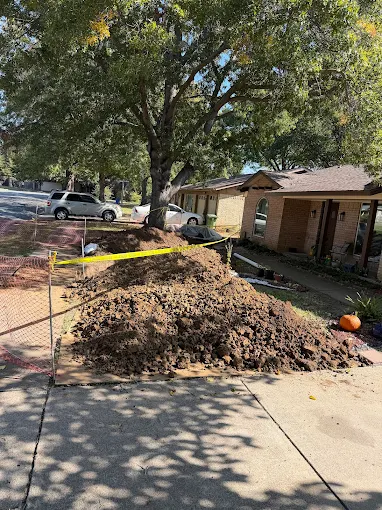
Slab Leak Location in Foundations: Pressure Tests Made Clear
On a quiet cul-de-sac in Keller, a homeowner opens their latest water bill and nearly drops it. The total has doubled since last month. No dripping faucets. No running toilets. The yard looks normal. But under the concrete slab, a hidden leak is slowly washing away soil, stressing the foundation, and setting up a costly surprise.
Situations like this are more common in North Texas than many people realize. Clay-heavy soils, shifting foundations, and older copper or galvanized lines under slabs make homes and small businesses in Keller, Fort Worth, and surrounding areas especially vulnerable to under-slab leaks. Nationally, the EPA estimates that household leaks can waste nearly 10,000 gallons of water per year. Under a foundation, that water doesn’t just vanish—it can damage structures.
This guide breaks down how professional slab leak location really works, with a focus on pressure testing and related diagnostics. You’ll learn how plumbers pinpoint leaks under concrete, what hydrostatic tests reveal, how non-destructive methods protect your property, and what repair options you have once a leak is found—so you can make confident, informed decisions.
Key Insight: Accurate slab leak location isn’t guesswork. It’s a structured diagnostic process—centered around pressure tests and specialized equipment—that can save Keller property owners thousands in unnecessary demolition and misdiagnosed repairs.
Why Slab Leaks Are a Big Deal for Keller Foundations
In Keller and across Tarrant County, our expansive clay soils expand when wet and shrink when dry. That constant movement puts stress on concrete slabs and the plumbing lines running underneath them. Over time, joints loosen, copper pinholes form, and PVC or cast-iron sewer lines crack.
Slab leaks matter for two big reasons:
- Structural risk: Water escaping beneath your slab can erode soil, leading to voids, uneven support, and eventually foundation movement or cracking.
- Hidden costs: Because the leak is concealed, the first sign is often a high bill, musty odors, or warm spots on the floor—not always obvious plumbing issues.
A recent Keller job illustrates this. A family near Bear Creek Park noticed one side of their living room floor felt slightly warmer. Their water bill had climbed 40%. There were no visible puddles. Using a combination of Slab Leak Detection methods—pressure testing, acoustic listening, and thermal imaging—we confirmed a hot-water slab leak under their living room, without breaking up half the house.
“Early slab leak detection can be the difference between a localized repair and a full-scale foundation and plumbing overhaul.” — All Source Plumbing Technician
For Keller property owners, the sooner a leak is accurately located, the less chance there is for foundation damage, mold growth, and long-term structural issues.
How Pressure Tests Reveal Hidden Foundation Leaks
Pressure testing is the backbone of professional slab leak location. Instead of guessing where water might be escaping, plumbers use controlled pressure to “ask” your plumbing system where the problem is.
How pressure tests work
For water lines under a slab, a plumber will typically:
- Isolate the line or system being tested.
- Attach a pressure gauge and pump.
- Pressurize the line to a safe, specified level.
- Monitor how quickly pressure drops.
If the system can’t hold pressure, there’s a leak somewhere in that isolated section. For sewer and drain lines, a related method—Hydro Static Testing—fills the system with water and tracks water level drops to identify leaks in buried or under-slab pipes.
On a recent commercial call in Keller, a retail space in a small strip center had recurring sewer backups with no obvious cause. Traditional snaking temporarily cleared the line, but the problem returned. A hydrostatic test on the building’s main sewer line showed the water level dropping steadily—clear evidence of an under-slab sewer leak. That test focused our search and prevented us from tearing up the wrong areas.
“Pressure tests don’t just say ‘you have a leak’—they tell us where to look next.” — Senior Diagnostic Plumber, All Source Plumbing
Once a pressure or hydrostatic test confirms a leak in a specific zone, we combine that information with other tools—acoustic listening, cameras, and thermal imaging—to zero in on the exact location.
Hydrostatic Testing vs. Other Leak Detection Methods
Pressure and hydrostatic tests are powerful, but they’re just part of a modern diagnostic toolkit. Understanding how they compare to other approaches can help you evaluate the thoroughness of a leak location service.
Common slab leak detection methods
Here’s how hydrostatic testing stacks up against some other tools we use in Keller homes and businesses:
| Method | Best For | Invasiveness | Typical Use in Keller Homes |
|---|---|---|---|
| Hydrostatic testing | Under-slab sewer leaks | Non-destructive | Confirming leaks in main drain lines |
| Pressure testing (water lines) | Pressurized water line leaks | Non-destructive | Verifying hot/cold water slab leaks |
| Acoustic listening | Pinpointing leak sound under concrete | Non-destructive | Locating exact leak spot |
| Thermal imaging | Hot water leaks under floors | Non-destructive | Mapping hot-water leak paths |
| Video camera inspection | Visual pipe condition, blockages | Minimal (via cleanouts) | Checking for cracks, roots, separations |
In one Keller home near the Keller Pointe, the owner suspected a slab leak because of a damp carpet patch. A hydrostatic test on the sewer line came back normal—no leak. That led us to pressure test the domestic water lines, which showed a pressure drop. Acoustic listening then pinpointed a small hot-water leak under a hallway. By ruling out the sewer line first with hydrostatic testing, we avoided unnecessary sewer repairs and focused on the real culprit.
Non-Destructive Slab Leak Location: Protecting Your Floors and Foundation
Homeowners often worry that slab leak detection means tearing up half their house. Years ago, that was closer to the truth. Today, non-destructive techniques allow us to locate leaks with surgical precision before we ever touch the concrete.
What non-destructive slab leak detection looks like
Modern Non-Destructive Slab Leak Detection combines:
- Hydrostatic and pressure tests to confirm which system (water vs. sewer) is leaking.
- Acoustic equipment that listens for the sound of water escaping under the slab.
- Thermal imaging cameras to detect temperature changes from hot-water leaks.
- Video inspection of accessible sewer and drain lines.
In a Keller ranch-style home built in the 1980s, the owners feared an extensive demolition after noticing cracks radiating from their bathroom doorway. We performed a hydrostatic test on the sewer line, which failed, then used a camera to inspect from the cleanout. The camera showed a break under the master bath. Acoustic listening and line tracing allowed us to mark the exact spot on the floor. Instead of tearing up the entire bathroom, we opened a single, targeted section of slab for repair.
“With the right diagnostic tools, we can often limit concrete removal to a few square feet, not entire rooms.” — All Source Plumbing Field Supervisor
This matters in Keller, where many homes have decorative flooring, custom tile, or engineered hardwoods. Non-destructive location protects your investment, reduces dust and disruption, and shortens repair time.
From Location to Repair: Your Options for Fixing Slab Leaks
Finding the leak is only half the battle. Once Slab Leak Location is complete, you’ll need to decide how to repair it. The right solution depends on pipe condition, location, and long-term goals.
Common slab leak repair options
- Direct access repair
- Break a small section of slab directly over the leak.
- Expose and repair or replace the damaged pipe segment.
- Best when the rest of the line is in good shape.
- Reroute / bypass
- Abandon the leaking under-slab section.
- Run new water lines through walls or attic spaces.
- Ideal when multiple leaks or aging pipes make future failures likely.
- Trenchless sewer replacement or repair
- For sewer and drain lines, Trenchless Sewer Replacement or relining can fix long sections under slabs with minimal digging.
- Often used when access is limited or landscaping and hardscapes are valuable.
We worked with a Keller business owner whose small office building had a failing under-slab sewer line causing recurring backups. Traditional excavation would have meant shutting down operations and tearing up interior floors. Instead, after confirming the extent of damage with hydrostatic testing and camera inspection, we used a trenchless method from outside the building to replace the line. Downtime was limited to a single day.
Here’s a quick comparison of traditional vs. modern slab leak repair approaches:
| Approach | Pros | Cons | Best Use Case |
|---|---|---|---|
| Traditional jackhammer & replace | Direct access, straightforward repair | Dust, noise, flooring removal | Isolated leaks, good pipe condition |
| Reroute above slab | Avoids future under-slab issues | Wall/attic access needed, visible changes | Older homes with multiple leaks |
| Trenchless sewer replacement | Minimal slab disturbance, faster | Not suitable for all pipe conditions | Long under-slab sewer runs |
Preventing Future Slab Leaks: Practical Steps for Keller Properties
Once you’ve gone through the stress of a slab leak, you don’t want a repeat performance. While no system is bulletproof, there are realistic ways to reduce the risk and catch problems earlier.
Maintenance and monitoring strategies
- Watch your water bill
Sudden, unexplained increases can be an early warning sign of under-slab leaks. Compare bills month-to-month, especially in milder weather when irrigation is lower.
- Schedule periodic plumbing inspections
A professional checkup—including Water, Sewer & Gas Diagnostics and targeted Drain Cleaning—can reveal pipe corrosion, slow drains, or minor leaks before they escalate.
- Address hard water issues
North Texas water is notoriously hard. Over time, mineral buildup can accelerate pipe wear. A properly sized Water Filter & Softener Installation can help extend the life of your plumbing and appliances.
- Upgrade aging systems
If your Keller home still has original 1970s–1980s copper or galvanized pipes, consider proactive Repiping sections that have shown issues.
A Keller homeowner off North Tarrant Parkway had experienced two slab leaks in three years—both repaired directly under the slab. During the second repair, we found extensive corrosion along a long hot-water run. Rather than waiting for leak number three, they chose to reroute that entire hot-water loop through the attic and add a tankless system. Their risk of another hot-water slab leak dropped dramatically.
“Preventive plumbing isn’t about upselling—it’s about trading surprise emergencies for planned improvements.” — All Source Plumbing Owner
What This Means for Businesses in Keller, TX
For local businesses—whether you’re running a restaurant off Keller Parkway, a boutique near Old Town Keller, or a professional office—slab leaks aren’t just a nuisance; they’re an operational risk.
A hidden leak under your slab can:
- Disrupt operations with sudden closures for repairs.
- Create liability issues from uneven floors, odors, or unsanitary conditions.
- Damage inventory, equipment, or customer areas.
- Inflate water bills and operating costs.
Because many commercial spaces in Keller share walls and plumbing runs with neighboring units, accurate Commercial Leak Detection becomes even more critical. Misdiagnosed leaks can lead to disputes between tenants, landlords, and neighboring businesses.
Professional pressure testing and hydrostatic testing help:
- Isolate the problem to your unit, a shared line, or the city connection.
- Minimize downtime by focusing repair efforts on the exact failure point.
- Protect finishes and build-outs with non-destructive location methods.
- Document findings for insurance claims and landlord coordination.
For example, a Keller café experienced recurring backups and foul odors. An initial assumption blamed “old pipes,” but our hydrostatic test and camera inspection showed a localized break in a shared main. By providing clear test results and video, the landlord and tenants quickly agreed on responsibility and moved forward with a targeted repair.
For any business, the key is speed and accuracy. The sooner you know exactly what’s wrong and where, the faster you can plan repairs around business hours, protect customers and staff, and avoid long-term damage.
Frequently Asked Questions
Q: How do I know if I have a slab leak in my Keller home or business?
A: Common signs include unusually high water bills, the sound of running water when everything is off, warm spots on concrete or tile, damp carpet, or cracks that seem to worsen quickly. You might also notice mildew smells or areas of your yard that stay soggy. If you suspect a problem, a professional Leak Location Service can perform meter checks, pressure tests, and other diagnostics to confirm whether you’re dealing with a slab leak, a fixture issue, or something else entirely.
Q: What exactly is hydrostatic testing, and is it safe for my plumbing?
A: Hydrostatic testing is a method where we block off a section of your sewer or drain system and fill it with water to a specific level. We then monitor that level over time. If it drops, there’s a leak somewhere in that isolated section. Performed by a licensed professional, hydrostatic testing is safe and follows industry best practices. It’s one of the most reliable ways to confirm under-slab sewer leaks before deciding on Sewer Repairs or replacement. It’s non-destructive and doesn’t require breaking concrete just to find out if a leak exists.
Q: Will slab leak detection destroy my floors or require major demolition?
A: Not with modern methods. Today’s Slab Leak Detection focuses on non-destructive tools—pressure tests, hydrostatic tests, acoustic listening devices, thermal imaging, and cameras. These allow us to narrow down the leak location under the slab before we ever consider opening the concrete. In many Keller homes, we can limit slab access to a small, targeted area or even opt for rerouting lines above the slab, depending on what we find and your preferences.
Q: How long does it take to locate and repair a typical slab leak?
A: Timeframes vary, but most residential Slab Leak Detection Service visits take a few hours for thorough testing and pinpointing. Once we know exactly where the leak is and what’s involved, many direct-access repairs can be completed within a day, plus time for concrete patching. Reroutes or trenchless solutions may take a bit longer but often reduce disruption to finished floors. For businesses in Keller, we can often schedule work during off-hours or in phases to reduce downtime.
Q: Can insurance help pay for slab leak repairs in Keller?
A: Coverage depends on your specific policy. Many homeowner policies help with the cost of accessing the leak (like opening the slab) and repairing resulting damage, but not always with replacing the entire plumbing line. Some policies have endorsements for foundation or Foundation Leak Repair that broaden coverage. Our team is experienced in documenting Water Leak Detection findings with photos, videos, and written reports that you can share with your adjuster to support your claim.
Q: Is it better to repair the leak under the slab or reroute the line?
A: It depends on the age and condition of your pipes, the location of the leak, and your long-term plans. If the rest of the line is in good shape and the leak is isolated, a direct under-slab repair may be the most cost-effective. If your home has older piping or multiple past leaks, rerouting that line through walls or the attic can prevent future under-slab failures. During our Residential Leak Detection visit, we’ll evaluate the system and walk you through the pros and cons of each option based on your specific situation.
Q: Do slab leaks only happen in older Keller homes?
A: No. While older homes are more likely to have corrosion and wear-related issues, newer homes in Keller can also experience slab leaks due to soil movement, installation defects, or high water pressure. We’ve seen leaks in homes less than 10 years old. Regular General Plumbing Repairs, pressure checks, and responding quickly to early signs of trouble are important regardless of your home’s age.
Ready to Get Started?
Slab leaks don’t fix themselves, and in Keller’s shifting soils, time is rarely on your side. The longer water escapes under your foundation, the higher the risk of structural movement, mold, and rising repair costs. If you’ve noticed warning signs—mysterious water usage, warm floors, cracking tile, or persistent musty odors—now is the time to act.
All Source Plumbing offers comprehensive Slab Leak Detection, including pressure testing, hydrostatic testing, and non-destructive location tools tailored to North Texas homes and businesses. Our licensed technicians live and work in this area, understand local soil and building practices, and know how to balance accuracy, cost, and disruption.
Your next step is simple: schedule a diagnostic visit. We’ll assess your system, explain what we find in plain language, and give you clear options—whether that’s a small targeted repair, rerouting, or a more extensive solution. No pressure, just honest recommendations based on real data from your property.
Protect your foundation, control your costs, and restore peace of mind with professional Leak Detection Near Me from a local team you can trust.
About All Source Plumbing
All Source Plumbing is a locally owned, full-service plumbing company based in Keller, TX, serving homeowners and businesses across Tarrant County. Our licensed, insured team specializes in advanced diagnostics, Slab Leak Repair, Drain Repair, Tankless Water Heater Installation, and comprehensive Plumbing Repairs. With years of experience in North Texas soils and building styles, we focus on accurate diagnostics, long-term solutions, and respectful service in your home or business. Learn more about our services at our website.