
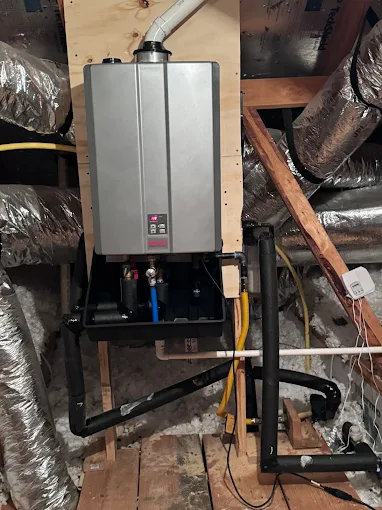
Understanding the Process of Tankless Water Heater Repair
A tankless water heater is one of those upgrades you don’t fully appreciate until something goes wrong. In Keller and the greater DFW area, where hard water and temperature swings are part of daily life, tankless systems are working overtime to keep your showers hot, your dishes clean, and your business running smoothly. When they start acting up—lukewarm water, error codes, or no hot water at all—it can bring your day to a standstill.
Industry data shows that many tankless issues are related to installation and maintenance, not the equipment itself. In fact, national studies suggest that improper sizing or venting is behind a significant share of early tankless failures. For Keller homeowners and businesses, that means the quality of your repair service matters just as much as the brand of heater you chose.
This guide walks you through how professional tankless water heater repair actually works—from the first inspection to final testing—so you know what to expect, what’s normal, and when it’s time to consider replacement instead of another repair.
Key Insight: Understanding the repair process helps you make smarter decisions, avoid repeat breakdowns, and get the longest possible life from your tankless water heater.
How Tankless Water Heaters Work (And Why They Fail)
Before talking repair, it helps to know what’s happening inside that compact box on your wall. A tankless water heater—gas or electric—doesn’t store hot water. Instead, it heats water on demand as it flows through the unit. That efficiency is great for energy bills, but it also means that any problem with flow, gas, electricity, or sensors can shut the entire system down.
Most tankless units in Keller are gas tankless water heaters, fueled by natural gas or propane. These rely on:
- A gas burner and ignition system
- Heat exchanger (where water is actually heated)
- Flow sensor and temperature sensors
- Exhaust venting
- Control board and safety devices
In our area, hard water is a big culprit. Mineral buildup on the heat exchanger can cause:
- Reduced hot water output
- Overheating and error codes
- Noisy operation and premature failure
We recently helped a Keller family whose unit kept flashing an error code and shutting off during showers. The system was only six years old, but the heat exchanger was heavily scaled due to lack of descaling. A thorough flush and sensor cleaning restored full function—without needing a new unit.
“Most tankless breakdowns are preventable with routine service. When they do fail, understanding the ‘why’ is just as important as fixing the ‘what.’” — All Source Plumbing Technician
Tankless systems are more complex than traditional tanks, which is why repair should always be handled by someone familiar with tankless water heater service, not just general plumbing.
CALLOUT: If your tankless heater is shutting down randomly or showing error codes, don’t ignore it—those are built-in safety protections doing their job.
Step 1: Initial Assessment and Diagnostics
A quality repair begins long before any tools come out of the truck. The first step is a detailed assessment of both the symptoms and the installation.
A professional technician will typically:
- Ask about the problem: when it started, what changed recently, whether it’s affecting all fixtures
- Check the unit’s age, brand, and model
- Review error codes on the display (if present)
- Inspect gas lines, shut-off valves, venting, and electrical connections
- Measure water pressure and temperature at fixtures
In Keller, we often see issues tied to older plumbing or prior DIY work—undersized gas lines, improper venting, or shared circuits that weren’t designed with a tankless water heater installation in mind. That’s why visual inspection is paired with diagnostic testing.
Common diagnostic steps include:
- Checking gas pressure and combustion quality on gas units
- Testing voltage and amperage on electric tankless heaters
- Measuring inlet and outlet temperatures
- Inspecting for hidden water leak detection needs if pressure drops or moisture is present
If the technician suspects a supply issue (like a leak or pressure loss), they may recommend additional services such as Water Leak Detection or Leak Location Service to make sure the tankless unit isn’t being blamed for a plumbing problem elsewhere.
A recent example: a small business in Keller called about “tankless failure” in their breakroom. After diagnostics, the real issue turned out to be a failing pressure regulator and a slow under-slab leak affecting pressure. The tankless unit was fine; the plumbing wasn’t.
Step 2: Ruling Out Plumbing and Leak-Related Issues
Not every hot water problem is a tankless problem. In fact, a significant number of service calls we see in Keller turn out to be related to the plumbing system feeding or distributing hot water—not the tankless unit itself.
Before opening the heater, a thorough pro will rule out:
- Cross-connections (cold water mixing with hot)
- Failed mixing valves at showers or sinks
- Clogged or partially blocked hot water lines
- Leaks in walls, attics, or under slabs
In North Texas, slab leak detection is particularly important. Homes built on concrete slabs can develop leaks in the hot water line running under the foundation. That can cause:
- Long wait times for hot water
- Lukewarm water at certain fixtures
- Higher gas or electric bills as the tankless runs more often
When those signs appear, your technician may recommend Slab Leak Detection or Under Slab Leak Detection using non-destructive methods. If a leak is confirmed, coordinated Slab Leak Repair and tankless water heater repair can restore system performance and protect your foundation.
“Fixing a slab leak without addressing the tankless, or vice versa, is like patching one tire on a car with four flat tires—you’ll still be stuck.” — All Source Plumbing Lead Tech
In one Keller home near Bear Creek Park, a family complained that their tankless heater “never worked right” after a minor earthquake-style foundation shift. Testing showed a hot line leak under the slab. Once we completed Concrete Slab Leak Repair and re-pressurized the system, the tankless unit operated perfectly with no additional repair needed.
CALLOUT: If your hot water issues started after foundation movement or you’ve noticed warm spots on floors, ask about foundation leak detection before replacing your tankless.
Step 3: Cleaning, Descaling, and Component-Level Repair
Once plumbing and supply issues are cleared, attention turns to the tankless unit itself. Many “repairs” start with a deep cleaning and descaling, especially in areas like Keller with mineral-heavy water.
Typical internal service steps include:
- Removing and cleaning inlet water filters
- Flushing the heat exchanger with a descaling solution
- Cleaning flame sensors and igniters on gas units
- Inspecting and cleaning venting for blockages
- Checking wiring connections and control board contacts
For many homeowners, this is the point where a general handyman might stop. But an experienced tankless technician goes further—testing and replacing individual components as needed, such as:
- Flow sensors and temperature sensors
- Gas valves and ignition modules
- Fan motors and exhaust components
- Thermostats and control boards
In a Keller neighborhood off Rufe Snow, we serviced a gas tankless water heater that shut down whenever two showers ran at once. Descaling improved performance, but diagnostics showed a failing flow sensor that was under-reading actual water flow. Replacing that sensor restored full capacity and reliable operation.
Here’s a quick comparison of a basic cleaning versus a full professional repair service:
| Service Type | What It Includes | When It’s Appropriate |
|---|---|---|
| Basic DIY Flush | Simple vinegar flush, filter rinse | Annual maintenance for healthy systems |
| Pro Maintenance & Cleaning | Descaling, filter service, vent check, safety tests | Yearly service, mild performance issues |
| Component-Level Repair | Parts replacement, wiring checks, combustion tuning | Error codes, shutdowns, inconsistent heat |
| Full Diagnostic & System Repair | Includes plumbing checks, leak checks, and sizing | Chronic issues, repeated failures |
Step 4: Repair vs. Replacement – Making the Smart Call
At some point, every system reaches a crossroads: keep repairing or invest in a new unit. The right answer depends on more than just the cost of the current repair.
Factors a professional will consider include:
- Age of the unit (most last 15–20 years with proper care)
- Frequency and cost of recent repairs
- Availability and price of replacement parts
- Efficiency compared to newer models
- Whether the original tankless water heater installation was done correctly
In Keller, we often see older first-generation tankless models that were installed when the technology was newer to the market. Some of these have proprietary parts that are now expensive or hard to find.
Here’s a simplified comparison to help frame the decision:
| Option | Pros | Cons | Best For |
|---|---|---|---|
| Continue Repairing | Lower upfront cost, no major changes needed | May cost more long-term, older tech, less efficient | Newer units with isolated issues |
| Targeted Upgrades + Repair | Fixes root causes (gas line, venting, scaling) | Higher initial bill than a simple repair | Units with install or water quality issues |
| Full Tankless Replacement | New warranty, higher efficiency, modern features | Higher upfront cost, may require install changes | Very old, unreliable, or unsafe systems |
We recently helped a Keller homeowner whose 14-year-old tankless heater had a failed heat exchanger and control board. Replacement parts plus labor approached 70% of the cost of a new, high-efficiency unit. In that case, tankless water heater replacement was the better long-term value—and we upgraded the gas line and venting to current standards at the same time.
“Good repair advice should be based on math and safety, not just what’s quickest or easiest. Sometimes the best ‘repair’ is a well-planned replacement.” — All Source Plumbing Owner
If you’re unsure, ask your technician to lay out the 5-year cost comparison of repair vs. replacement, including likely future maintenance.
Step 5: Testing, Safety Checks, and System Balancing
After any repair or major service, thorough testing is non-negotiable. This is where a professional separates themselves from a quick fix.
A complete post-repair checklist often includes:
- Verifying ignition and shutdown sequences on gas units
- Checking for gas leaks at connections with approved methods
- Measuring burner performance and combustion (where applicable)
- Confirming proper vent draft and no exhaust recirculation
- Testing water temperature at multiple fixtures
- Verifying flow rates match the unit’s rated capacity
In some homes and businesses, hot water issues stem from distribution, not just production. That’s why we also look at:
- Balancing hot water delivery to distant fixtures
- Ensuring recirculation systems (if present) are working correctly
- Checking for partial clogs that might call for Drain Cleaning Services or Hydro Jet Drain Cleaning
A Keller restaurant we service had a tankless unit that tested fine at the heater but struggled to supply distant sinks during peak hours. Further investigation showed constricted old drain and supply lines. After targeted drain line replacement and some plumbing drain installation improvements, the existing tankless heater easily kept up with demand.
CALLOUT: Never skip combustion and gas leak testing after work on a gas unit. Safety is every bit as important as hot water performance.
Step 6: Preventive Maintenance and Long-Term Protection
A well-repaired tankless water heater should not just work today—it should be set up to work reliably for years. That’s where preventive maintenance and system-wide thinking come in.
In Keller and surrounding areas, a solid long-term plan often includes:
- Annual or semi-annual tankless water heater maintenance (descaling, safety checks)
- Installing or servicing a whole-home water softener or filter
- Verifying gas line sizing and pressure remain within spec
- Periodic checks for early signs of slab or foundation leaks
If your home has hard water—a common issue in North Texas—pairing your unit with a properly sized Water Filter Softener Repair & Installation solution can dramatically extend the life of the heat exchanger and reduce error codes.
We’ve seen two nearly identical homes in Keller with tankless units installed the same year. One had a softener and annual service; the other did not. After 10 years:
- The maintained unit was still within manufacturer specs with minor part replacements.
- The neglected unit needed a full tankless water heater replacement due to severe scaling and corrosion.
“Think of maintenance as cheap insurance. A couple of scheduled visits can prevent the kind of damage that no repair can fully undo.” — All Source Plumbing Technician
Preventive steps also include keeping an eye on the broader plumbing system. Regular Water, Sewer & Gas Diagnostics can catch small issues—like pressure irregularities or early slab leaks—before they start affecting your tankless heater and your foundation.
What This Means for Homes and Businesses in Keller, TX
Keller is growing quickly, with a mix of older homes, new builds, and commercial spaces. That variety means no two tankless water heater repair jobs look exactly the same. A unit in an older home off Keller Parkway may be dealing with legacy piping and potential slab issues, while a newer office near Hwy 377 might have cutting-edge equipment but undersized gas lines.
Local conditions matter:
- Hard water: Increases scaling, making regular descaling and filtration more important.
- Slab foundations: Raise the stakes for Slab Leak Location and foundation leak repair when hot water performance changes.
- Seasonal demands: Winter cold snaps and summer peak usage both stress tankless systems.
For Keller homeowners, understanding the repair process helps you:
- Avoid unnecessary replacements when a targeted repair will do
- Recognize when plumbing issues—like leaks or drain problems—are the real culprit
- Ask smarter questions and choose a plumbing partner who looks at the whole system, not just the box on the wall
For local businesses—restaurants, salons, gyms, medical offices—reliable hot water isn’t just comfort; it’s compliance and customer experience. A well-maintained tankless system, backed by proactive leak and drain management, keeps you open and operating without last-minute emergencies.
Ultimately, a tankless water heater is an investment. Protecting that investment means pairing it with smart installation, thoughtful repairs, and ongoing care tailored to Keller’s specific water and soil conditions.
Frequently Asked Questions
Q: Why does my tankless water heater keep shutting off during showers?
A: Frequent shutdowns usually point to a safety mechanism doing its job. Common causes include scaling inside the heat exchanger, a dirty filter, low gas pressure, or a failing flow sensor. In some Keller homes, we also find hot water line leaks under the slab affecting pressure and flow. A professional tech will start with diagnostics on the unit, then check for broader plumbing issues using tools similar to those used in Residential Leak Detection and Professional Leak Detection. Once the root cause is clear, they can recommend a targeted fix—anything from descaling to component replacement or leak repair.
Q: How often should I have my tankless water heater serviced in Keller?
A: With our hard water, once a year is a good baseline for most homes, and twice a year for heavy-use households or commercial properties. A proper tankless water heater service visit typically includes descaling, filter cleaning, vent inspection, and safety testing. If your home doesn’t have a softener or filtration system, yearly service becomes even more important. During these visits, a pro can also spot early signs of problems like minor leaks or drain issues that might eventually require Drain Repair Service or Emergency Leak Detection Service if left unchecked.
Q: How do I know if the problem is my tankless heater or a plumbing leak?
A: Symptoms can overlap, which is why proper diagnostics matter. If you notice hot water issues along with higher water bills, damp spots, or warm areas on floors, a leak is more likely. In Keller’s slab homes, that often points toward the need for Slab Leak Detection Service or Non-Destructive Slab Leak Detection. If the only issue is inconsistent water temperature or error codes on the unit, the tankless itself is the likely culprit. A qualified plumber will test both the heater and the plumbing system—pressure tests, meter checks, and visual inspections—to pinpoint whether you need slab leak plumbing repair or focused tankless repair.
Q: Is it safe to keep repairing an older tankless water heater?
A: It can be, as long as the unit is structurally sound and passes safety checks. Age alone isn’t a reason to replace; condition and repair history matter more. However, if your system is over 12–15 years old and you’re facing major component failures—like a heat exchanger crack or repeated control board issues—continuing to repair might not be cost-effective. Your plumber should compare the projected cost of ongoing tankless water heater repair against a new tankless water heater installation, factoring in improved efficiency and warranty coverage. Safety tests for gas leaks, combustion, and venting are key to making a confident decision.
Q: Can a clogged drain affect my tankless water heater’s performance?
A: Indirectly, yes. While the heater itself doesn’t rely on drains to operate, plumbing systems are interconnected. Severe clogs or backups can change how and where you use hot water, potentially masking or mimicking heater problems. In some cases, long-standing clogs can lead to pipe damage or leaks that affect water pressure and flow to the unit. If you’re dealing with recurring backups, it may be worth scheduling Drain Cleaning Services or Sewer Drain Repair alongside tankless diagnostics so you’re not treating symptoms in isolation.
Q: What’s the difference between gas and electric tankless repairs?
A: Gas tankless water heater repairs often involve combustion-related components—burners, igniters, gas valves, and venting—along with standard sensors and controls. Safety testing for gas leaks and exhaust is critical. Electric tankless water heater repairs focus more on elements, relays, and electrical supply issues like undersized wiring or breakers. In Keller, most whole-home units are gas, but some smaller point-of-use systems are electric. A good repair company will be comfortable with both types and may recommend Water, Sewer & Gas Diagnostics for gas-powered systems to ensure everything from the meter to the heater is within safe limits.
Q: How does a slab leak impact my tankless water heater over time?
A: A hot water slab leak forces your tankless unit to work harder and longer. Because hot water is constantly escaping under the slab, the heater cycles more frequently to keep up, increasing wear on internal components. You may notice higher gas or electric bills, longer run times, or lukewarm water at fixtures. Over time, this extra workload can shorten the life of the unit and lead to more frequent tankless water heater repair calls. Addressing the root issue with Foundation Leak Repair or Water Line Slab Leak Repair protects both your home’s structure and your tankless investment.
Ready to Get Started?
If your tankless water heater is acting up, waiting rarely makes the problem cheaper or easier. Small issues—like minor scaling or a failing sensor—can snowball into bigger repairs or even premature replacement if they’re ignored. In Keller’s hard-water, slab-foundation environment, that risk is even higher.
Now is the best time to schedule a professional evaluation. Whether you’re dealing with error codes, lukewarm water, or you just know it’s been too long since your last service, All Source Plumbing can walk you through your options. Our team looks at the whole picture: the heater, your plumbing system, potential leaks, and even your drains, so you get a solution that actually lasts.
Next steps are simple:
- Call or schedule an appointment online
- Share your symptoms, unit info, and any recent changes in your home or business
- We’ll perform a thorough diagnostic and present clear, upfront recommendations—repair, maintenance, or replacement if truly needed
With local, experienced techs and full-service capabilities—from tankless water heater repair to Emergency Plumbing—you get one team that can handle it all.
About All Source Plumbing
All Source Plumbing is a locally owned and operated plumbing company serving Keller, TX and the surrounding communities. Our licensed technicians specialize in tankless and traditional Water Heater Repair & Installation, advanced Leak Location & Repair, Piping & Repiping, and full-service diagnostics for water, sewer, and gas lines. With deep experience in North Texas’ unique soil, water, and foundation conditions, we focus on long-term solutions, not band-aid fixes. To learn more about our services or schedule a visit, visit our website.