
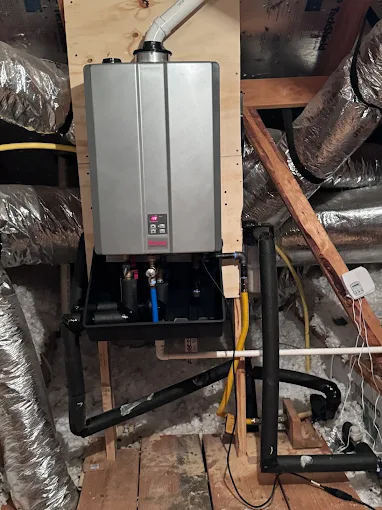
Expert Tips for Tankless Water Heater Repair
On a chilly North Texas morning, nothing derails your day faster than turning on the shower in your Keller home and getting a blast of cold water instead of the endless hot water your tankless system promised. We see this all the time across Keller, Southlake, and the surrounding communities: a great tankless system brought to its knees by skipped maintenance, hard water buildup, or a small issue that was ignored a little too long.
According to the U.S. Department of Energy, properly installed and maintained tankless water heaters can be 24–34% more energy efficient than traditional tanks for homes using 41 gallons or less of hot water daily. But that efficiency—and the long lifespan you were sold on—depends heavily on how well the system is cared for and how quickly problems are addressed.
In this guide, you’ll learn how to spot early warning signs, which repairs are realistic for handy homeowners, when to call in a professional, and how to extend the life of your system in Keller’s hard water environment. You’ll also see real examples from local homes and businesses so you know what to expect if your tankless unit starts acting up.
Key Insight: Most tankless water heater repairs start as small, preventable issues—especially in hard water areas like Keller. Catching and addressing them early can save you thousands in damage, downtime, and premature replacement.
Understanding How Your Tankless Water Heater Really Works
Tankless systems look simple on the outside, but inside they’re compact, high-tech appliances. Knowing the basics of how they work makes it much easier to understand what’s going wrong when there’s no hot water.
When you open a hot water tap, cold water flows through the unit and a flow sensor tells the burner (gas) or heating elements (electric) to turn on. The water passes through a heat exchanger, warms up rapidly, and exits the unit at a set temperature. Once you close the tap, the system shuts off.
In Keller, we see two main types:
- Gas tankless water heaters (most common in North Texas homes)
- Electric tankless water heaters (more common in smaller homes, garages, or point-of-use applications)
Both can last 15–20 years with proper Tankless Water Heater Maintenance, but they’re sensitive to:
- Mineral buildup from hard water
- Improper gas sizing or venting
- Undersized electrical circuits
- Inadequate water pressure or flow
A Keller homeowner in the Marshall Ridge area recently called us because their three-year-old tankless unit kept shutting off mid-shower. The cause wasn’t a bad heater—it was a partially clogged inlet screen and scale buildup from our hard water. A thorough flush and filter adjustment brought it right back to life.
“Most tankless failures we see in Tarrant County aren’t catastrophic—they’re maintenance issues that have been building for months or years.” — All Source Plumbing Technician
Understanding this basic operation helps you narrow down whether you’re dealing with a flow issue, a fuel problem, or a control/temperature issue before you pick up the phone.
Common Tankless Water Heater Problems in Keller Homes
Tankless systems are reliable when they’re sized and installed correctly, but certain patterns show up again and again in Keller and nearby communities. Recognizing these early warning signs can save you from a cold shower—or worse, water damage.
1. Intermittent Hot Water or “Cold Water Sandwich”
You turn on the shower, get hot water, then it suddenly goes cold for a few seconds, then hot again. This is often caused by:
- Short, back-to-back hot water uses
- Flow rate dropping below the unit’s minimum
- Improper recirculation setup
In one Hidden Lakes home, a family complained that every shower started with a blast of cold water. Their circulation pump and timer weren’t synced with their tankless unit. Once we adjusted the settings and added a small buffer tank, the “cold sandwich” disappeared.
2. No Hot Water at All
This usually points to:
- No gas/electric supply
- Ignition failure
- Failed sensor or control board
- Severe scale buildup blocking flow
We recently responded to a call off Rufe Snow Drive where a gas tankless heater wouldn’t fire. The issue? A small spider web in the burner assembly interrupting ignition. A careful cleaning and combustion check solved it—no parts required.
3. Fluctuating Temperatures
If your water temperature swings up and down:
- The unit may be undersized for your home
- Someone may have changed the temperature setting
- There could be a partially blocked filter or scale buildup
4. Error Codes on the Display
Modern tankless units are good at telling you what’s wrong—if you know how to read them. Common codes relate to:
- Flame failure
- Exhaust/venting issues
- Water flow or pressure problems
When these issues show up alongside unexplained high water bills or damp spots, we often pair tankless diagnostics with Professional Leak Detection to rule out hidden plumbing leaks that might be affecting pressure and performance.
DIY vs. Professional: What You Can Safely Do (And What You Shouldn’t)
Many Keller homeowners are handy and like to tackle basic repairs—and some tankless maintenance tasks are absolutely reasonable to do yourself. Others, especially anything involving gas lines or complex electronics, belong in the hands of a licensed pro.
Safe Homeowner Tasks
These are typically safe with the unit’s power/gas off and the manual in hand:
- Cleaning the inlet water filter/screen
A clogged inlet filter reduces flow and can cause error codes. Turning off water to the unit, removing, and rinsing the screen is a simple but powerful fix.
- Checking and gently cleaning the exterior air intake screen
Spiders, dust, and debris can restrict combustion air.
- Resetting the unit after a power outage
Sometimes a simple reset clears a temporary fault.
A Keller resident near Bear Creek Park called us after losing hot water during a storm. We walked them through a basic reset over the phone, and the unit came back online—no truck roll, no bill.
Tasks That Require a Professional
You should always call a licensed plumber for:
- Gas line work or gas pressure adjustments
- Venting modifications or repairs
- Internal component replacement (heat exchanger, control board, sensors)
- Full descaling/flush if shut-offs or valves are incorrectly configured
- Diagnostics when error codes keep returning
“If a repair involves gas, combustion, or opening the electrical compartment, that’s the line where DIY should stop.” — All Source Plumbing Lead Tech
Attempting complex repairs yourself can void the manufacturer’s warranty and, more importantly, create safety risks. Our team often pairs tankless diagnostics with comprehensive Water, Sewer, Gas Diagnostics to make sure your entire system is operating safely and efficiently.
Why Hard Water in Keller Is Tough on Tankless Units
One of the biggest threats to tankless water heaters in Keller isn’t a defective part—it’s our water. North Texas is known for its hard water, which is rich in calcium and magnesium. That mineral content builds up inside the heat exchanger over time, restricting flow and reducing efficiency.
What Hard Water Does to Your Tankless System
- Narrows internal passageways, reducing water flow
- Forces the unit to work harder and longer to heat the same volume
- Triggers error codes related to flow or overheating
- Can shorten the lifespan of the heat exchanger
We serviced a restaurant off Keller Parkway that relied on a commercial tankless system for dishwashing. Their unit was less than five years old but heavily scaled. It had never been flushed. After a professional descaling and installation of a filtration/softening system, their hot water recovery improved and energy use dropped.
Tank vs. Tankless in Hard Water Conditions
Here’s how traditional and tankless systems compare under Keller’s hard water conditions:
| Feature/Impact | Traditional Tank Heater | Tankless Water Heater |
|---|---|---|
| Hard water impact | Sediment at bottom, lower efficiency | Scale on heat exchanger, flow restrictions |
| Maintenance frequency in Keller | Flush every 1–2 years | Flush every 6–12 months |
| Lifespan with no softener | 8–12 years | 8–15 years (but with more performance issues) |
| Lifespan with softener/filtration | 12–15 years | 15–20 years or more |
| Energy efficiency over time | Declines significantly with sediment | Declines moderately if flushed regularly |
To protect your investment, we often recommend pairing your tankless unit with proper Water Filter & Softener Installation. This not only helps the heater, but also protects fixtures, piping, and appliances throughout your home.
Professional Tankless Water Heater Repair: What to Expect
If basic checks don’t solve your hot water issue, it’s time to bring in a professional. Knowing what to expect during a service visit can make the process smoother and help you ask the right questions.
Step 1: Initial Assessment and Questions
A good technician will start by asking:
- How long the problem has been happening
- Whether it’s affecting all fixtures or just some
- If any recent plumbing, gas, or electrical work was done
- When the unit was last serviced or flushed
In a home near Keller Town Center, a homeowner reported that only the upstairs showers were losing hot water. That clue helped us quickly narrow the issue to a partially restricted line and not the heater itself.
Step 2: System Diagnostics
This typically includes:
- Checking for and documenting error codes
- Measuring water pressure and flow rates
- Inspecting gas pressure (for gas units)
- Verifying venting and air supply
- Inspecting filters and screens
- Checking for signs of leaks or corrosion
If we suspect a hidden issue in the plumbing, we may recommend Hydro Static Testing or targeted Leak Location Service to rule out pressure or volume problems feeding the heater.
Step 3: Repair, Flush, or Replacement Recommendation
Depending on what we find, options may include:
- Flushing/descaling the unit
- Replacing sensors, valves, or igniters
- Adjusting gas or temperature settings
- Recommending system upgrades if the unit is undersized
In some cases, especially when the unit is old, heavily corroded, or improperly installed from the start, a Tankless Water Heater Replacement may make more financial sense than repeated repairs.
“A quality repair isn’t just about fixing today’s problem—it’s about preventing the next one.” — All Source Plumbing
Preventive Maintenance: Extending the Life of Your Tankless System
The single best way to avoid surprise breakdowns and costly repairs is consistent maintenance tailored to Keller’s water conditions and your household’s hot water usage.
Annual (or Semi-Annual) Professional Service
For most homes in Keller, we recommend:
- Annual flushing/descaling of the heat exchanger
- Cleaning or replacing inlet screens and filters
- Checking gas pressure and combustion (for gas units)
- Inspecting venting and condensate lines
- Verifying temperature settings and safety controls
Heavier-use homes (large families, multi-bath homes, or homes with recirculation systems) may benefit from service every six months.
We recently set up a maintenance schedule for a multi-generational household in Keller with a large gas tankless unit. Before maintenance, they experienced fluctuating temperatures and occasional error codes. After two regular service visits, those issues disappeared, and their gas bill stabilized.
Simple Habits for Homeowners
You can also:
- Glance at your unit monthly for any drips, rust, or error codes
- Listen for unusual noises during operation
- Avoid cranking the temperature too high (120°F is usually sufficient)
- Keep the area around the unit clear and well ventilated
When we combine tankless maintenance with broader General Plumbing Repairs, we often catch small issues—like a slowly leaking valve or minor drain restriction—before they stress the heater or cause bigger problems.
When Tankless Problems Point to Bigger Plumbing Issues
Sometimes, tankless water heater trouble is just the symptom. The real cause lies elsewhere in your plumbing system. In Keller’s mix of older homes and new construction, we often see:
- Pressure problems from failing pressure-reducing valves
- Hidden leaks under slabs affecting water volume and heater performance
- Drain issues causing slow fixtures and backpressure
Slab Leaks and Tankless Performance
If your unit is running constantly, but hot water seems weak or inconsistent at fixtures, a hidden leak may be wasting hot water before it ever reaches you. We’ve seen this in several Keller neighborhoods with older copper lines under concrete slabs.
Using Slab Leak Location technology, we can pinpoint under-slab leaks without tearing up your entire floor. Once we confirm an issue, our team can handle Slab Leak Repair Service or rerouting to protect both your foundation and your tankless system.
Drain and Sewer Issues
While they may seem unrelated, serious drain problems can indicate deeper plumbing aging or damage that also affects water lines and heater performance. We often combine tankless service with:
- Drain Cleaning Services for slow or backed-up lines
- Hydro Jet Drain Cleaning for severe buildup
- Sewer Drain Repair or Trenchless Sewer Replacement when lines are damaged
“A water heater doesn’t live in isolation. It’s part of a system, and if that system is stressed, the heater will show it.” — All Source Plumbing
If you’re seeing a combination of hot water issues, rising water bills, damp spots, or drain problems, it’s worth looking at the whole picture with comprehensive diagnostics rather than just treating the heater as a standalone problem.
What This Means for Businesses in Keller, TX
Tankless water heaters aren’t just in homes. We see them in restaurants, salons, gyms, medical offices, and small manufacturing facilities across Keller. For these businesses, reliable hot water isn’t a luxury—it’s part of everyday operations and customer safety.
A salon on Keller Parkway can’t afford to send clients home because there’s no hot water for hair washing. A restaurant near Old Town Keller must maintain consistent sanitizing temperatures to stay compliant with health codes. In both cases, an unexpected tankless failure can mean lost revenue, frustrated customers, and potential health or code issues.
For local businesses, the stakes are higher:
- Downtime costs more: Every hour without hot water can mean lost appointments or closed doors.
- Usage is heavier: Commercial tankless units work harder and longer than residential ones.
- Regulations matter: Many industries must maintain certain temperatures for sanitation.
That’s why we often recommend:
- Proactive maintenance contracts for commercial Tankless Water Heater Service
- After-hours or early-morning appointments to minimize disruption
- Backup solutions or staged systems for critical businesses
In one Keller restaurant, we scheduled quarterly descaling and inspections outside of normal business hours. Their previous pattern of mid-dinner-rush failures has disappeared, and they now see their tankless system as a dependable asset rather than a ticking time bomb.
For both homes and businesses in Keller, the takeaway is clear: your tankless system can be a workhorse for many years, but only if it’s sized correctly, maintained regularly, and supported by a healthy plumbing system.
Frequently Asked Questions
Q: How often should I flush my tankless water heater in Keller’s hard water conditions?
A: In Keller and the greater Tarrant County area, annual flushing is the minimum we recommend for most homes. If you have very hard water and no softening system, a flush every 6–9 months is even better. Regular descaling helps prevent mineral buildup inside the heat exchanger, which can cause error codes, reduced flow, and shorter equipment life. During a professional flush, we also check filters, valves, and overall system health. Many homeowners pair this service with broader General Plumbing Repairs to keep the entire system running smoothly.
Q: My tankless heater shows an error code—can I just reset it?
A: A quick reset can occasionally clear a harmless, one-time fault, especially after a power outage. However, if the error code returns, it’s warning you about an underlying problem such as flow restriction, ignition failure, or venting issues. Repeatedly resetting the unit without addressing the cause can lead to more serious damage. Take a photo of the error code and call a professional familiar with Tankless Water Heater Repair. In many cases, a technician can diagnose likely causes just from the code, your description of symptoms, and a basic system check.
Q: How do I know if my tankless problem is actually caused by a leak somewhere else?
A: Warning signs include unexpected spikes in your water bill, hot spots on floors, damp carpet along interior walls, or the heater running more often than usual without any change in your hot water habits. A hidden leak can reduce water pressure and volume, making your tankless system work harder or behave unpredictably. In Keller, we frequently use Residential Leak Detection and Slab Leak Detection Service to pinpoint hidden issues under slabs or behind walls. Fixing the leak often restores normal tankless performance and prevents long-term foundation or structural damage.
Q: Should I repair my older tankless water heater or replace it with a new model?
A: The decision depends on age, condition, and repair history. If your unit is under 10 years old, generally well-maintained, and facing its first major issue, repair is often the most cost-effective route. However, if it’s older than 12–15 years, has a history of frequent problems, or shows significant corrosion or scale damage, replacement may be a smarter investment. Newer systems are often more efficient and easier to maintain. During a service visit, we’ll walk you through both options, including estimated remaining lifespan and operating costs, so you can make an informed choice about Water Heater Repair & Installation.
Q: Are tankless water heaters really better than traditional tanks for Keller homes?
A: “Better” depends on your priorities. Tankless units offer endless hot water, better energy efficiency, and a smaller footprint, which many Keller homeowners appreciate. However, they’re more sensitive to hard water and require more disciplined maintenance. Traditional tanks are simpler and often cheaper upfront but less efficient and more prone to standby heat loss. In hard water areas like Keller, pairing either option with Water Filter & Softener Installation makes a big difference. During an in-home evaluation, we can compare options based on your usage, budget, and long-term plans.
Q: What should I do if my tankless heater fails after hours or on a weekend?
A: If you suddenly lose hot water outside normal business hours, first check simple items: other gas appliances (for gas units), breakers (for electric units), and any visible error codes. Avoid repeated resets if the unit keeps shutting down. For urgent situations—such as leaks, burning smells, or suspected gas issues—treat it as an emergency and shut off the water and/or gas to the unit. Our Emergency Plumbing team in Keller can assess whether you need immediate service or if it’s safe to wait until normal hours, potentially saving you money while still protecting your home.
Q: Can tankless water heaters be part of a larger plumbing upgrade?
A: Absolutely. Many Keller homeowners choose to upgrade to tankless when they’re already planning other projects, such as bathroom remodels, Piping & Repiping, or Fixture Repair & Installation. Installing a tankless unit during a larger project can simplify routing, venting, and wiring, and may reduce labor costs. It also gives you a chance to address related issues—like old shut-off valves, corroded lines, or undersized gas piping—at the same time, which sets your new heater up for a long, trouble-free life.
Ready to Get Started?
Tankless water heaters are a smart choice for Keller homes and businesses, but they need the right care to deliver on their promise of efficient, endless hot water. If your system is showing signs of trouble—error codes, fluctuating temperatures, or sluggish performance—waiting rarely makes things better. Small issues like scale buildup, minor leaks, or ignition problems can quickly grow into no-hot-water emergencies or costly damage.
Now is a great time to schedule a professional checkup, especially if it’s been more than a year since your last service. Our licensed technicians at All Source Plumbing live and work right here in the Keller area, so we understand local water conditions, building styles, and code requirements. Whether you need a quick repair, routine maintenance, or are considering a full Tankless Water Heater Installation, we’ll walk you through your options and provide clear, upfront pricing.
Take the next step toward reliable, efficient hot water. Schedule a service visit, ask about ongoing maintenance plans, or request a whole-home plumbing evaluation so your tankless system—and everything connected to it—stays in top shape.
About All Source Plumbing
All Source Plumbing is a locally owned and operated plumbing company serving Keller, TX and the surrounding communities. Our licensed, experienced team handles everything from Tankless Water Heater Repair and installation to Drain Cleaning, Foundation Leak Detection, and full-system diagnostics. We’re committed to honest recommendations, quality workmanship, and long-term solutions tailored to North Texas homes and businesses. Learn more about our services and history in Keller on our website.