
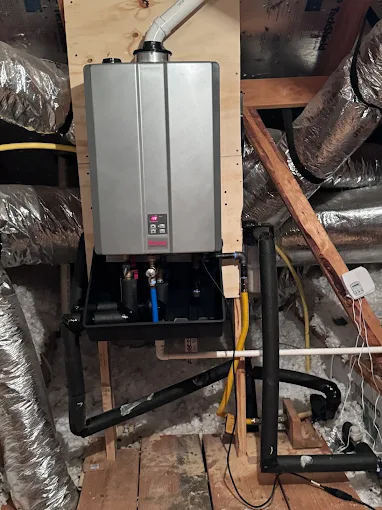
More than 90% of tankless water heater service calls are triggered by issues that started small: a bit of scale buildup, a partially clogged filter, or a misread error code that went ignored. Yet homeowners often assume a tankless unit is “set it and forget it” because it doesn’t have a big storage tank to rust through. That assumption is exactly what leads to cold showers, fluctuating temperatures, and costly emergency repairs. Understanding the basics of tankless water heater repair can turn potential breakdowns into quick, manageable fixes instead of major disruptions.
Tankless water heaters are efficient, compact, and designed to last longer than traditional tank-style units, but they are not maintenance-free. They rely on sensors, flow switches, gas valves, and heat exchangers that all need the right conditions to operate correctly. When something goes wrong, the unit often tries to protect itself by shutting down or throwing an error code. Learning how to read those signs, perform simple checks, and know when to call a professional is the foundation of any essential guide to tankless water heater repair.
Whether you are dealing with inconsistent hot water, strange noises, or total system failure, a structured approach to troubleshooting makes a huge difference. Instead of randomly pressing reset buttons or changing settings, you can work through logical steps: confirm power and gas, check water flow, inspect filters, and then move on to more advanced diagnostics. This guide walks through those steps in detail, helping you understand common problems, safe DIY tasks, and the situations where professional tankless water heater repair is not just recommended, but critical.
How Tankless Units Work
To repair a tankless water heater effectively, it helps to know what is happening inside the box on your wall. Unlike a traditional tank that stores hot water, a tankless unit heats water only when there is demand. When you open a hot water tap, a flow sensor inside the heater detects water movement. This triggers the control board to open a gas valve or activate electric heating elements, depending on the model, and the heat exchanger rapidly warms the water as it passes through.
Because the unit is constantly modulating its output based on flow rate and temperature settings, it relies heavily on sensors and electronics. Thermistors measure incoming and outgoing water temperatures, pressure sensors monitor water pressure, and safety devices like flame sensors and overheat cutoffs ensure the system operates safely. If any of these components fail or get dirty, the control board may shut down the system or display an error code to prevent damage.
Understanding these internal processes clarifies why certain problems show up the way they do. For example, if the flow sensor is partially blocked by debris or scale, the heater may fail to ignite, resulting in cold water even though everything else appears normal. If the heat exchanger is scaled up, the unit may overheat or struggle to reach the desired temperature. Knowing these relationships helps you trace symptoms back to likely causes when you are working through tankless water heater repair steps.
It is also important to recognize that gas and electric tankless units share many concepts but differ in their repair needs. Gas units involve combustion, venting, and gas supply issues, while electric units focus more on electrical connections and element performance. In both cases, familiarizing yourself with the basic components and their roles makes any troubleshooting far less intimidating.
Common Symptoms And What They Mean
Most tankless water heater repairs start with a symptom: no hot water, inconsistent temperature, error codes, or unusual noises. No hot water at all is often the most alarming. In many cases, this points to something relatively straightforward: lack of gas supply, tripped breaker, closed water valve, or a failed ignition sequence. Before assuming the worst, it is wise to verify that gas valves are open, breakers are on, and shutoff valves on the water lines are fully open.
Inconsistent temperature, where water runs hot then suddenly cold or fluctuates, usually indicates a problem with flow rate, scaling, or incorrect settings. Tankless units have a minimum flow requirement; if the flow is too low, the burner may shut off, leading to a “cold sandwich” effect. Mineral buildup on the heat exchanger can also reduce heat transfer and cause the unit to overheat and cycle off. Sometimes, mixing valves or crossover issues in the plumbing can mimic water heater problems, so it is important to consider the whole system.
Error codes are another common starting point in tankless water heater repair. Modern units display specific codes on a digital screen, indicating issues like ignition failure, flame loss, exhaust blockage, or sensor errors. While each manufacturer uses its own code list, many codes point to similar categories of problems. Reading the user manual or looking up the code from a reliable source is essential; guessing or clearing codes without understanding them can create recurring problems or mask safety issues.
Unusual sounds, such as rattling, whistling, or loud whooshing, can also signal trouble. Rattling may indicate loose mounting brackets or internal components, while high-pitched whistling often points to restricted water flow through scaled or partially closed valves. A roaring or whooshing burner sound could be normal on startup but may also suggest improper gas pressure or venting concerns. Taking note of when the sound occurs—startup, during operation, or shutdown—gives valuable clues for diagnosing the issue.
Step-By-Step Basic Troubleshooting
Before diving into complex tankless water heater repair, it is smart to run through a basic troubleshooting checklist. Start with the simplest checks: confirm power to the unit, verify gas or electrical supply, and make sure all isolation valves on the water lines are open. For electric models, check the breaker panel and any local disconnects. For gas models, confirm that the gas shutoff valve is parallel with the pipe (open) and that other gas appliances in the home are working normally.
Next, inspect the unit’s display panel. Are there any error codes or warning lights? If so, note them before resetting anything. Many issues can be temporarily cleared by turning the power off and back on, but doing so without recording the code makes it harder to diagnose recurring problems. Consult the user manual for that specific code; it will often list probable causes and basic steps you can safely try on your own, such as cleaning filters or checking vent terminations.
Then, examine the water side. Check the inlet water filter or screen, which is often located on the cold water line where it enters the heater. Over time, debris, sediment, or rust particles can clog this filter and restrict flow. Removing and rinsing this screen under running water is a simple but powerful step that can restore proper operation. Also ensure that the hot water valve downstream from the heater is fully open and that no nearby fixtures have shutoff valves partially closed.
If your unit still does not perform correctly after these steps, observe exactly what happens when you open a hot water tap. Does the unit click or attempt to ignite? Does the flame indicator turn on and then quickly shut off? Does the temperature display fluctuate? This kind of observation helps narrow down whether you are dealing with ignition issues, sensor problems, or flow-related faults. At this point, if the solution is not obvious and especially if gas or internal electrical work is involved, calling a qualified technician is the safest route.
Descaling And Cleaning The System
One of the most critical maintenance tasks in tankless water heater repair is descaling the heat exchanger. Hard water deposits minerals inside the small passages of the heat exchanger, reducing efficiency and eventually causing overheating or error codes. Manufacturers often recommend annual descaling in areas with hard water, and in some cases even more frequently. Skipping this maintenance can shorten the lifespan of the unit and lead to expensive repairs.
The descaling process typically involves shutting off the cold and hot isolation valves on the heater, connecting service hoses to the built-in service ports, and circulating a descaling solution, such as white vinegar or a manufacturer-approved chemical, through the unit using a small pump and bucket. The solution dissolves mineral deposits inside the heat exchanger over a period of 30 to 60 minutes. Afterward, the system is flushed with clean water to remove any remaining solution and loosened scale.
Cleaning should not stop at the heat exchanger. The inlet water filter, as mentioned earlier, should be inspected and cleaned regularly. Some units also have air intake screens, fan housings, and condensate drains that can accumulate dust, lint, or debris. Gently vacuuming or wiping these accessible areas with the power off can improve airflow and prevent overheating or error codes related to exhaust and combustion.
While many homeowners are capable of performing basic descaling and cleaning with proper instructions, there are times when it is better to hire a professional. If your unit is older, heavily scaled, or showing multiple error codes, a trained technician can combine descaling with a full inspection, combustion analysis for gas units, and testing of sensors and controls. This proactive approach often reveals small issues before they become major tankless water heater repair emergencies.
When To Call A Professional
Not every tankless water heater issue should be handled as a DIY project. Problems involving gas supply, venting, or internal electrical components can carry serious safety risks if handled improperly. If you smell gas, see signs of exhaust backdrafting, or notice scorch marks or melting near the unit, shut it down and contact a professional immediately. These symptoms may indicate gas leaks, improper combustion, or venting blockages that require specialized tools and training to correct.
Repeated error codes that return after basic troubleshooting and resets also point to deeper issues. For example, persistent ignition failures could be caused by faulty igniters, gas valves, or control boards. Temperature-related codes might indicate failing thermistors or severe scaling that simple homeowner-level descaling will not fully resolve. Attempting to replace internal components without experience can damage the unit or void the warranty.
Professional technicians bring diagnostic equipment that the average homeowner does not have, such as manometers for checking gas pressure, combustion analyzers to verify proper burn characteristics, and multimeters to test electrical components safely. They also have access to manufacturer-specific training and technical bulletins that explain common failures for particular models. This combination of tools and knowledge often allows them to diagnose and repair problems much faster and more accurately.
There is also the question of warranty and code compliance. Many manufacturers require that installation and certain types of repairs be performed by licensed professionals to maintain warranty coverage. Local building codes may also dictate how gas lines, venting, and electrical connections must be configured. By involving a qualified technician for complex tankless water heater repair, you protect not only your equipment but also your home’s safety and compliance with regulations.
Preventive Care And Long-Term Reliability
The most cost-effective repair strategy is to prevent major problems from developing in the first place. Regular maintenance is the backbone of long-term tankless water heater reliability. Setting up a schedule for annual or semiannual checkups ensures that descaling, filter cleaning, and safety inspections happen consistently. This routine attention keeps sensors clean, flow paths open, and combustion systems tuned, drastically reducing the likelihood of surprise breakdowns.
Water quality management is another major factor. If you live in an area with hard water, consider installing a water softener or a scale-reduction system upstream of the tankless heater. By reducing mineral content, you slow down the rate of scale buildup inside the heat exchanger and other components. This not only improves performance but also extends the lifespan of the unit and reduces the frequency and intensity of descaling procedures.
Monitoring your system’s behavior over time is equally important. Take note of any gradual changes: longer wait times for hot water, subtle temperature swings, or new noises. These small shifts can be early warning signs that something needs attention. Addressing them promptly with cleaning, adjustments, or minor repairs often prevents more serious damage. Keeping a simple log of maintenance dates, error codes encountered, and work performed can be surprisingly helpful, both for you and for any technician you hire.
Finally, stay informed about your specific model. Read the user manual, register your product, and keep track of any manufacturer updates or recalls. Some companies provide online resources, maintenance reminders, and troubleshooting guides tailored to your exact unit. A single reliable resource, such as null, along with your manual can serve as a quick reference when you need to interpret error codes or plan maintenance. Combining good information with consistent care is the best way to ensure your tankless water heater delivers reliable hot water for many years.
Frequently Asked Questions
How often should I descale my tankless water heater? The ideal descaling frequency depends on your water hardness and usage, but many manufacturers recommend at least once a year. In areas with very hard water or in homes with heavy hot water demand, descaling every 6 to 9 months may be more appropriate. If you start seeing error codes related to overheating, reduced flow, or fluctuating temperatures, it may be a sign that scale has built up faster than expected. Installing a water softener or scale-reduction system can help extend the time between descaling sessions and make each cleaning more effective.
Why does my tankless water heater sometimes go cold during a shower? Sudden temperature drops often result from flow-related issues. Tankless units need a minimum flow rate to stay activated; if someone opens another faucet or appliance, or if the shower valve restricts flow too much, the heater may temporarily shut off, causing the water to go cold. Another possibility is scale buildup in the heat exchanger, which can cause the unit to overheat and cycle off. Checking for partially closed valves, cleaning the inlet filter, and descaling the system are good first steps when addressing this type of problem.
Is it safe to repair a gas tankless water heater myself? Basic tasks like cleaning filters, descaling the heat exchanger following the manufacturer’s instructions, and checking for obvious issues such as closed valves are generally safe for many homeowners. However, repairs that involve gas lines, burners, ignition systems, venting, or internal electrical components should be left to licensed professionals. Gas leaks, carbon monoxide risks, and electrical hazards are serious concerns. If you are uncertain about any step or need to open the unit’s internal compartments, it is best to contact a qualified technician.
What do I do if my tankless water heater shows an error code? When an error code appears, note it carefully before resetting or cycling power to the unit. Then consult your user manual or a trusted online resource to identify what the code means for your specific model. Many codes point to common issues like ignition failure, blocked exhaust, low water flow, or sensor problems. Some can be addressed by cleaning filters, checking vent terminations, or ensuring proper gas and water supply. If the code persists after basic troubleshooting or if it relates to combustion or electrical faults, schedule a professional tankless water heater repair service.
How long should a tankless water heater last with proper maintenance? With consistent care, many tankless water heaters can last 15 to 20 years or more, which is typically longer than traditional tank-style heaters. Regular descaling, filter cleaning, and annual professional inspections help prevent premature wear on the heat exchanger, sensors, and control board. Maintaining proper water quality and promptly addressing minor issues also plays a big role in longevity. While no system is immune to eventual component failures, a well-maintained tankless unit will generally provide more years of efficient, reliable hot water and require fewer major repairs over its lifetime.